
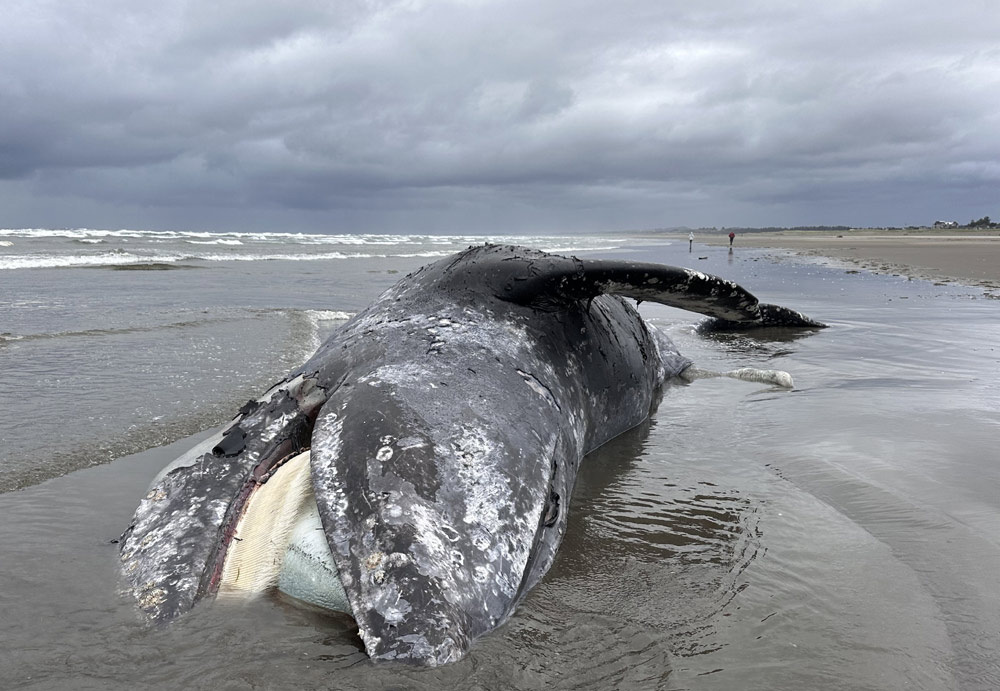
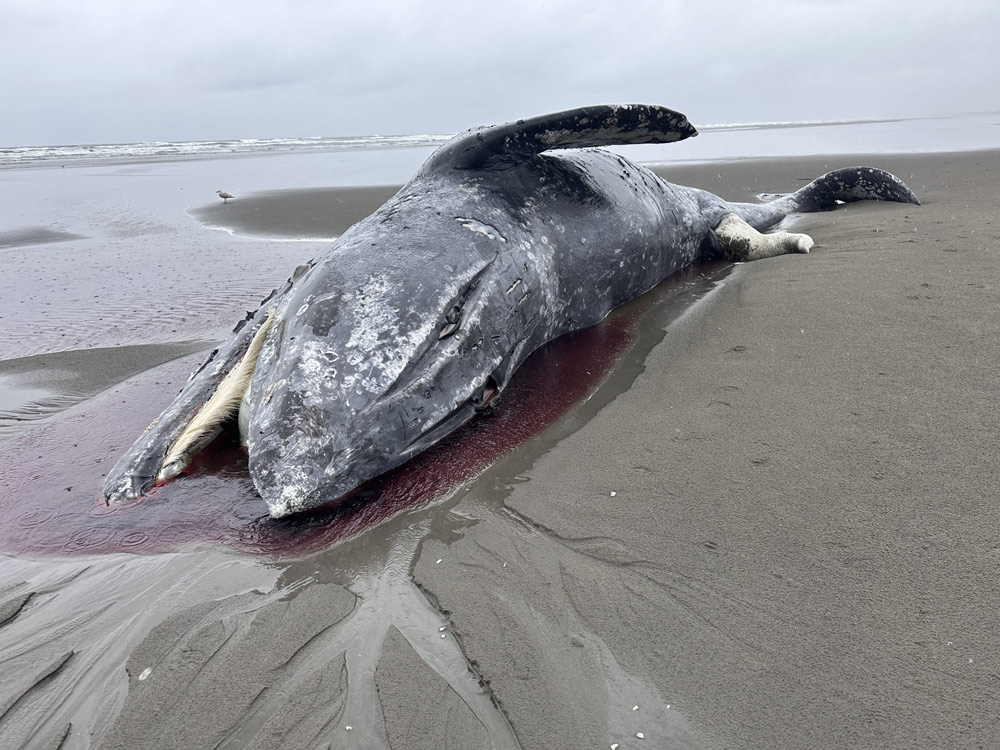
A large gray whale that had been drifting offshore for days washed up Tuesday morning on the south end of Seaside Beach, drawing attention from scientists and beachgoers along the Oregon coast.
The whale, estimated to be about 40 feet long, was identified as a male. Officials had been tracking the animal prior to its arrival after it was spotted floating near Tillamook Head, several miles offshore.
By the time it reached land near Avenue K, the whale had already been deceased for some time. Experts noted signs of decomposition, making it more difficult to immediately assess its condition.
A necropsy is scheduled for later this week, which will provide a closer look at the whale and may help determine what led to its death. These examinations are detailed and physically demanding, involving a coordinated team effort.
During the process, scientists will begin by documenting the whale through measurements and photographs. They will then examine the thick blubber layer, checking for bruising, abnormalities, and overall condition. Samples are collected for laboratory testing, which can reveal more about the whale’s health prior to death.
From there, researchers move deeper into the body, inspecting organs for disease, parasites, or other irregularities. Access to different organs can vary depending on how the whale is positioned and its level of decomposition. Gray whales, notably, have three stomachs, and contents from these can also provide important clues.
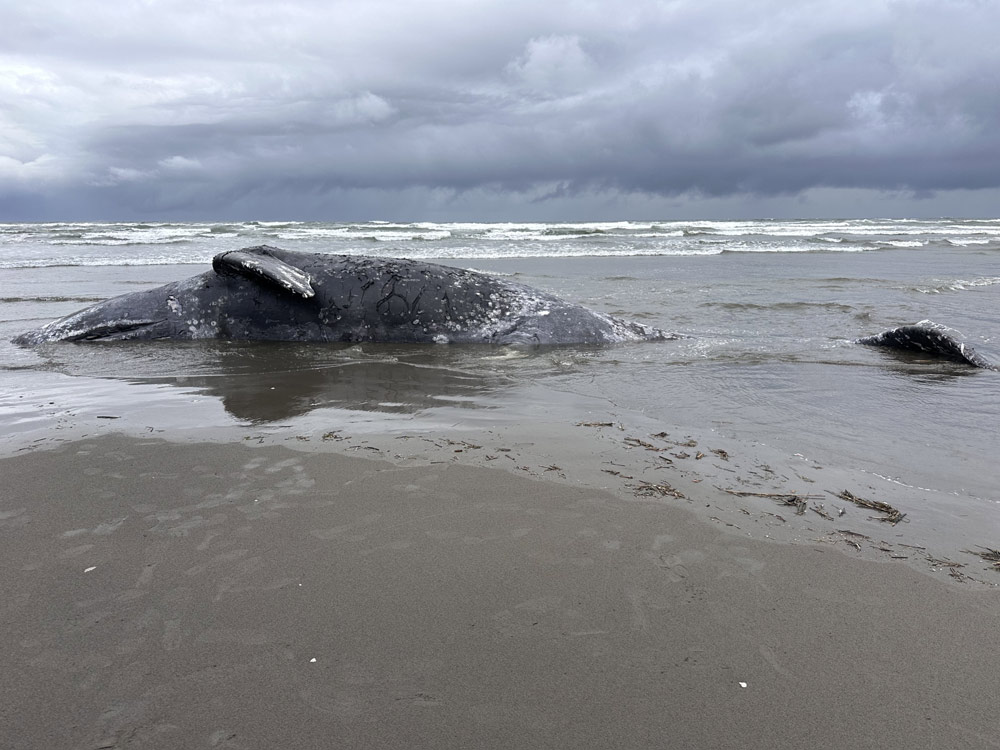
Early observations suggest there were no clear signs of major trauma. However, some experts reviewing images noted the possibility the whale may have been undernourished, though confirmation will depend on the necropsy results.
This incident is part of a broader pattern being observed along the West Coast. The Seaside whale is one of several recent strandings, including others in Oregon and Washington within the past few weeks. Scientists say many gray whales in recent years have shown signs of malnutrition, raising concerns about food availability in their Arctic feeding grounds.
Researchers believe environmental changes, including shifts in ocean conditions and prey populations, may be contributing factors. As gray whales migrate long distances each year, weakened individuals are more likely to wash ashore during the journey.
What happens next depends on a variety of factors. In many cases, leaving the whale in place is beneficial to the ecosystem. As the carcass breaks down, it provides a food source for scavengers and returns nutrients to the surrounding environment. In other situations, removal or burial may be necessary due to location or public safety concerns.
Officials are reminding the public to keep a safe distance. People are advised to stay at least 100 feet away and avoid touching the animal while crews conduct their work.
More information is expected following the necropsy, which may offer further insight into both this individual whale and the broader trend unfolding along the Pacific coast.