

Oregon’s absolutely insane and controversial Initiative Petition 28 has sparked fierce debate across the state, but now the conversation is reaching far beyond Oregon’s borders.
This week, rock musician, longtime hunting advocate, and outdoors television personality Ted Nugent joined Fox News to discuss the proposal, which has become one of the most closely watched ballot initiatives in Oregon. The measure, commonly known as the PEACE Act, has drawn strong reactions from hunters, anglers, ranchers, animal-rights activists, conservationists, and elected officials.
During the interview, Nugent didn’t hold back.
The 77-year-old outdoorsman criticized the proposal and argued that hunting, fishing, trapping, farming, and ranching play a vital role in wildlife management and environmental stewardship. His comments quickly gained attention among hunting and fishing communities, many of whom have been closely following developments surrounding IP28 for months.
The proposal has become one of the most polarizing wildlife-related initiatives Oregon has seen in recent years.
What Is IP28?

Initiative Petition 28 seeks to remove several longstanding exemptions within Oregon’s animal cruelty laws.
Supporters of the proposal argue that current laws provide broad exceptions that allow animals to be harmed or killed under circumstances they believe should be prohibited. They contend that society has evolved in its understanding of animal welfare and that legal protections should reflect those changes.
Opponents, however, argue that the proposal’s language could have sweeping consequences extending far beyond animal abuse cases.
The reality is, the measure will affect hunting, fishing, livestock operations, veterinary practices, wildlife management programs, rodeos, and other activities that have long been legal under Oregon law.
The proposal has generated concern among hunting organizations, agricultural groups, and many outdoor recreation advocates who fear it could fundamentally change how wildlife and livestock are managed throughout the state.
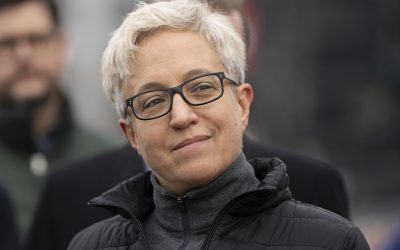
Even some political leaders, such as Oregon’s governor Tina Kotek, who disagree on many issues have expressed reservations about the measure.
As debate continues, both supporters and opponents are making their case to Oregon voters.
Perhaps the most surprising development in the entire IP28 debate is how far the proposal has already progressed.
To qualify for the ballot, supporters needed 117,173 valid signatures. According to organizers, more than 120,000 signatures have now been submitted to the Oregon Secretary of State, putting the measure over the required threshold pending verification.
As someone who has spent decades exploring Oregon, talking with hunters, anglers, ranchers, farmers, and outdoor enthusiasts across every corner of the state, I have to admit I’m stunned the proposal made it this far.
Whether you support hunting or simply enjoy the outdoors, hunting and fishing have long been woven into Oregon’s identity. From salmon fishing on the coast and steelhead runs in our rivers to deer and elk camps that have been family traditions for generations, these activities remain a significant part of life for many Oregonians.
That’s what makes the signature total so noteworthy. Regardless of where someone stands on IP28, surpassing 120,000 signatures demonstrates that the proposal has attracted far more attention and support than many observers initially expected.
What once seemed like a fringe idea discussed mainly within animal-rights circles has evolved into one of the most closely watched ballot proposals in Oregon, drawing national media coverage and prompting responses from public figures such as Ted Nugent, conservation groups, agricultural organizations, and elected officials.
The debate is no longer a hypothetical one. It has become a statewide conversation, and one that appears likely to continue growing in the months ahead.
Ted Nugent’s Response
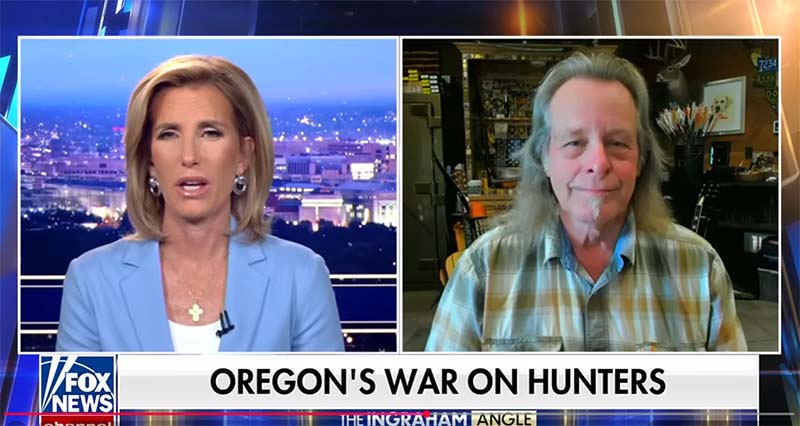
Appearing on Fox News, Nugent argued that regulated hunting and fishing are essential tools for maintaining healthy wildlife populations.
According to Nugent, wildlife management depends on balancing animal populations with available habitat and resources.
He told Fox News that allowing populations to exceed what the land can support can lead to disease, habitat degradation, and other ecological problems.
Nugent framed hunting, fishing, trapping, farming, and ranching as activities that are not only traditional but environmentally beneficial when properly managed.
He described regulated harvest as an important component of wildlife conservation and argued that licensed hunters and anglers have contributed significantly to conservation funding throughout North America.
At one point in the interview, Nugent jokingly remarked that if hunting were outlawed in Oregon, he might move to the state and hunt anyway, drawing laughter from the hosts.
While clearly delivered as a joke, the comment reflected the intensity of his opposition to the proposal.
A National Debate Arrives In Oregon
The discussion surrounding IP28 mirrors debates taking place throughout the country regarding animal rights, wildlife management, food production, and the role hunting plays in modern society.
Supporters of hunting often point to conservation programs funded through hunting licenses, tags, and excise taxes on firearms and ammunition.
For decades, those funding mechanisms have generated billions of dollars for habitat restoration, wildlife research, public land acquisition, and conservation efforts.
Many wildlife agencies across the country rely heavily on that funding.
Hunters also frequently argue that regulated hunting helps wildlife agencies manage animal populations and address conflicts involving overabundant species.
Supporters of IP28 see the issue differently.
They argue that modern society should move toward alternatives that reduce or eliminate the need to kill animals for food, recreation, or commercial purposes.
Advocates of the measure believe existing exemptions within animal cruelty laws fail to adequately protect animals from suffering.
The disagreement reflects fundamentally different views about humanity’s relationship with animals and the natural world.
The Statement From Supporters
During the Fox News segment, hosts read a statement attributed to the chief petitioner behind the proposal.
The statement argued that supporters are advocating for changes because they believe animals are being harmed under current legal protections.
According to the statement, supporters are confident that people can meet their needs without injuring or killing animals.
That position reflects the broader philosophy behind the initiative.
Supporters generally argue that technological advances, alternative food sources, and changing cultural attitudes make many traditional practices unnecessary.
Critics respond that such arguments fail to account for wildlife management realities, agricultural needs, and rural lifestyles that remain deeply connected to hunting, fishing, and livestock production.
Why The Proposal Has Generated So Much Attention
Few ballot initiatives have generated as much discussion among Oregon’s outdoor communities as IP28.
Hunting and fishing remain important traditions across much of the state.
From Roosevelt elk along the coast to mule deer in Eastern Oregon and salmon fisheries throughout the Pacific Northwest, outdoor recreation remains deeply woven into Oregon’s culture and economy.
Many rural communities also depend on agriculture and livestock production.
Because of that, opponents argue that the initiative could affect far more than recreational hunting.
Some have raised concerns about potential impacts on ranching operations, livestock management practices, and other agricultural activities.
Supporters dispute many of those interpretations and argue that opponents are overstating the proposal’s effects.
The differing interpretations have fueled ongoing debate about exactly how the measure would function if enacted.
Nugent’s Conservation Argument
One of the central themes of Nugent’s appearance involved wildlife conservation.
He argued that regulated hunting has contributed to the recovery and growth of numerous wildlife species.
Throughout North America, populations of species such as wild turkey, elk, white-tailed deer, and others have increased significantly over the past century following conservation efforts supported by state wildlife agencies, sportsmen’s organizations, and conservation groups.
Nugent pointed to those successes as evidence that regulated hunting and conservation can work together.
He also argued that wildlife management requires active involvement from humans rather than a hands-off approach.
Supporters of animal-rights initiatives often challenge that perspective, arguing that wildlife should be protected through nonlethal methods whenever possible.
The disagreement highlights one of the core questions at the heart of the debate.
What is the best way to protect animals while also managing wildlife populations and ecosystems?
There is no shortage of strong opinions on either side.
Oregon At The Center Of The Conversation
As signature gathering and public discussion continue, Oregon has become the focus of a national conversation about animal rights and wildlife policy.
The fact that a figure as well-known as Ted Nugent is now discussing the proposal on national television demonstrates how much attention the issue has attracted.
For supporters, the initiative represents an opportunity to expand protections for animals and rethink practices they view as outdated.
For opponents, it represents a dramatic challenge to hunting, fishing, agriculture, and wildlife management traditions that have existed for generations.
Regardless of where Oregonians stand on the issue, there is little question that IP28 has become one of the state’s most talked-about ballot proposals.
And with national figures, advocacy groups, outdoor organizations, and political leaders increasingly weighing in, the debate shows no signs of slowing down.
Whether discussed around campfires, in coffee shops, at feed stores, on social media, or on national television, the conversation surrounding IP28 has become much larger than Oregon itself.
For now, both sides continue making their case, while Oregonians decide what role hunting, fishing, farming, ranching, and animal welfare should play in the state’s future.