

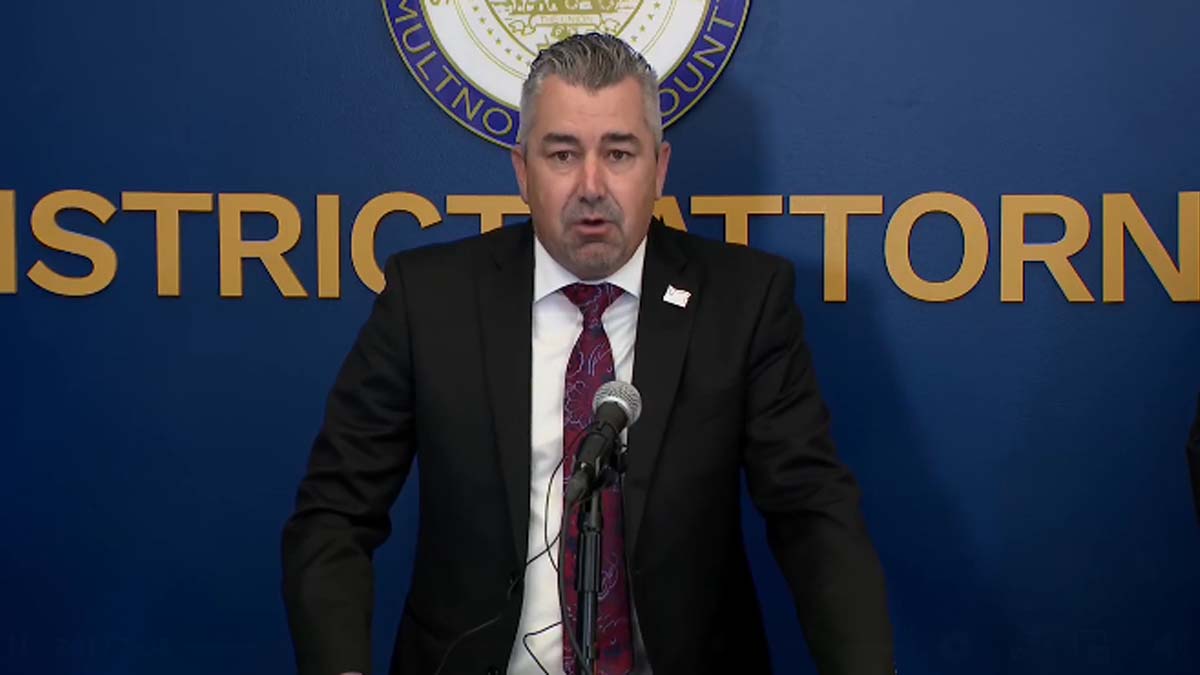
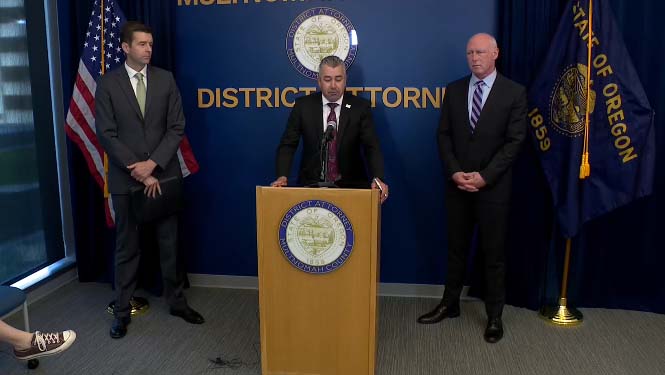
PORTLAND, Ore. — Standing alongside state and federal law enforcement partners at a packed press conference Tuesday morning, Multnomah County officials proudly announced the successful completion of Portland’s ten-year strategy for addressing mental illness by doing almost nothing about it.
“Today marks a major milestone,” one official told reporters from behind a podium emblazoned with government seals. “A decade ago, we made the difficult decision to stop pretending we had enough psychiatric beds, treatment facilities, or long-term care options. Since then, we’ve remained remarkably consistent.”
Officials described the anniversary as one of the city’s greatest policy achievements.
According to a detailed 147-page report released during the event, Portland has successfully spent ten years acknowledging a growing mental health crisis, discussing a growing mental health crisis, studying a growing mental health crisis, and funding programs to examine the growing mental health crisis.
The report noted that actually solving the crisis remains scheduled for a future phase.
“We’ve learned a lot,” another official said. “For example, we’ve learned the problem is still there.”
Audience members applauded.
The press conference included a slideshow showing before-and-after photos from 2016 and 2026. In both photos, visibly unstable individuals appeared to be experiencing psychiatric emergencies in public.
Officials described the comparison as evidence of “continuity and consistency.”
“This didn’t happen overnight,” one speaker explained. “Maintaining this level of dysfunction takes years of careful planning.”
Reporters were given a timeline highlighting major accomplishments from the past decade:
2016: Declare crisis.
2017: Form task force.
2018: Study recommendations.
2019: Create advisory committee.
2020: Discuss recommendations.
2021: Review findings.
2022: Launch pilot program.
2023: Evaluate pilot program.
2024: Form oversight committee.
2025: Study why previous efforts failed.
2026: Hold celebratory press conference.
Experts called the timeline “a masterclass in administrative endurance.”
At one point during the presentation, officials unveiled a chart showing billions spent on homelessness, addiction services, behavioral health initiatives, consultants, coordinators, outreach specialists, strategic planners, program evaluators, deputy evaluators, senior deputy evaluators, and evaluation oversight coordinators.
The section detailing psychiatric treatment capacity consisted of a blank slide.
Several reporters attempted to ask whether Oregon should build additional secure mental health facilities.
The question was immediately referred to a working group expected to issue preliminary recommendations sometime before the heat death of the universe.
Outside the building, residents interviewed by reporters expressed mixed reactions.
“I remember when they said this was temporary,” said one Portland resident while stepping around a shopping cart engulfed in philosophical debate with a parking meter.
“At first I thought somebody would eventually do something,” he added. “Now I realize this is the plan.”
The event concluded with the unveiling of a commemorative plaque honoring everyone who participated in ten years of discussions.
The inscription reads:
“Dedicated To The Countless Public Officials, Consultants, Advisors, Stakeholders, Facilitators, Working Groups, Focus Groups, Steering Committees, Listening Sessions, And Community Partners Who Courageously Refused To Let Action Get In The Way Of Process.”
At press time, city leaders announced a new $4.8 million study to determine whether the public is beginning to notice.