
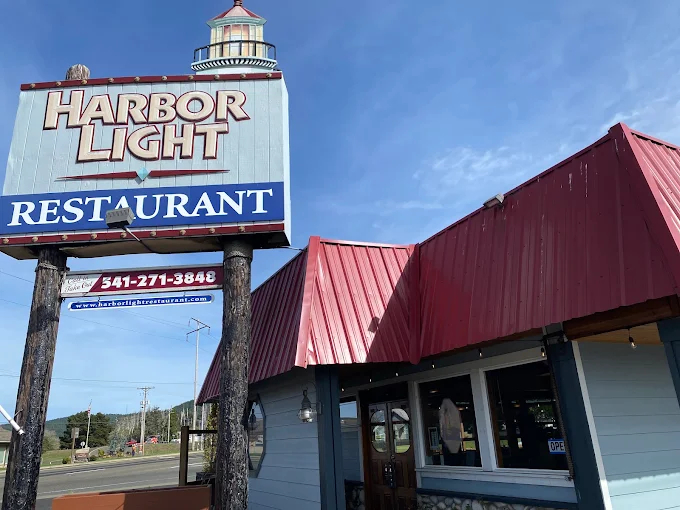
Some restaurants feel connected to the place around them from the moment you walk through the door.
The food makes sense for the landscape. The menu reflects what people have eaten in the region for generations. The story behind the building follows the changing history of the town outside, from its busiest industrial years to the quieter rhythms of modern coastal life.
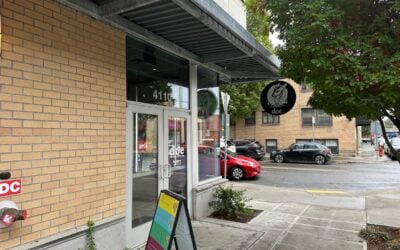
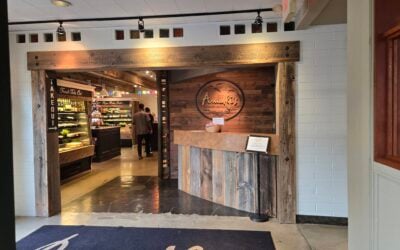
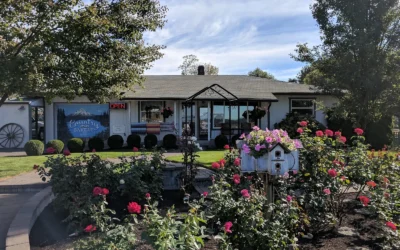
Harbor Light Restaurant in Reedsport is one of those places.
Today, diners know it for hand-dipped fish and chips, homemade clam chowder, fresh Oregon seafood, smoked meats, savory pot pies, burgers made with wild game, and desserts featuring local berries. It is a comfortable, welcoming place where travelers can warm up after a windy afternoon on the dunes, where local families can gather over familiar meals, and where a cup of chowder can become something far more elaborate once crab, bay shrimp, smoked salmon, cheese, and garlic toast enter the picture.
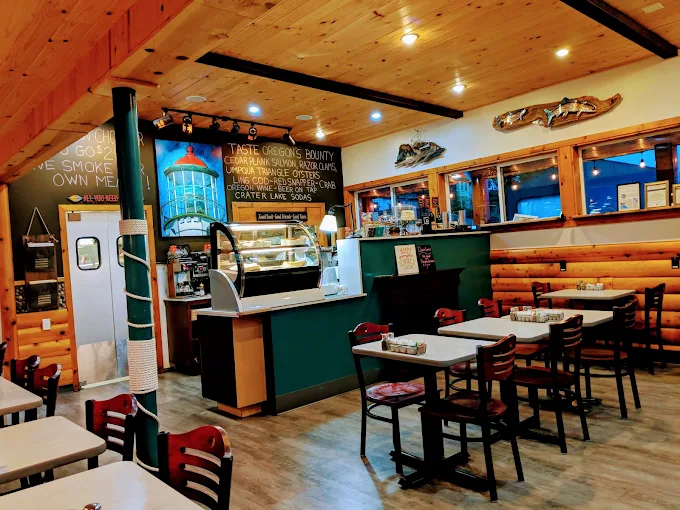
But Harbor Light’s story began long before its current name appeared over the door.
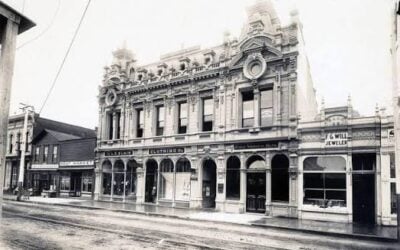
The restaurant first opened in 1950 as Duke’s Drive-in, complete with the roller-skating carhops that defined roadside dining during that era. Ten years later, new owners purchased the business and renamed it the Skylark Cafe.
That early history places Harbor Light squarely inside an Oregon Coast that looked very different from the one travelers know today.
Reedsport was a prosperous logging town surrounded by sawmills, timber operations, a paper mill, and fish-processing plants. Nearby Winchester Bay and Salmon Harbor were closely tied to commercial fishing and sport fishing, bringing workers, anglers, visitors, and money into the local economy.
This was not yet the Oregon Coast of vacation rentals, travel influencers, and carefully planned weekend getaways. It was a working coastline where people earned their living in mills, on fishing boats, in processing plants, and throughout the forests surrounding the Umpqua River.
Restaurants served those communities.
They fed workers coming off long shifts, families driving through town, fishermen returning from the water, and travelers making their way along Highway 101. Food had to be generous, satisfying, and dependable. A restaurant survived by becoming part of local life, not simply by catching the attention of tourists for one busy summer.
More than 70 years after Duke’s Drive-in opened, that sense of local connection still runs through Harbor Light.
For the past four decades, the Serang family has owned the restaurant. During that time, chef and owner Lauree Serang has gradually updated the food, atmosphere, and appearance while preserving the warmth and accessibility that helped the business endure.
Harbor Light remains rooted in the community that shaped it, but it has also become a destination for travelers from across Oregon and beyond.
Many arrive for the fish and chips.
They return for everything else.
From Roller-Skating Carhops To A Coastal Dining Room
It is difficult to imagine a more unmistakably 1950s beginning than Duke’s Drive-in.
Cars pulled in from the highway. Orders were carried outside. Carhops glided between vehicles on roller skates, delivering food to customers who ate without leaving their seats.
Drive-ins became symbols of postwar American car culture. As automobile ownership grew and highways connected communities more closely, restaurants adapted to a public that increasingly experienced the country through a windshield.
The Oregon Coast was part of that transformation.
Highway 101 carried residents, workers, fishermen, tourists, and commercial traffic between coastal towns. A drive-in in Reedsport could serve people heading north toward Florence, south toward Coos Bay, inland along the Umpqua River, or west toward Winchester Bay.
Duke’s Drive-in opened in 1950, a time when Reedsport was experiencing the benefits of a powerful resource economy.
Logging and timber manufacturing supported the town. Sawmills processed the forests harvested throughout the surrounding region. A paper mill and fish-processing facilities contributed additional jobs.
Ten years after Duke’s opened, new owners purchased the business and renamed it the Skylark Cafe.
The name changed, but the restaurant’s role remained familiar. It was still a place where local people and travelers could sit down for a straightforward meal in a town shaped by hard work.
Over the decades, Reedsport’s economy changed.
The timber industry declined from its mid-century peak. Mills closed or reduced operations. Commercial fishing faced changing markets, environmental pressures, regulatory shifts, and the natural unpredictability of life on the water.
Tourism became increasingly important.
Travelers came to explore the Oregon Dunes, fish from Winchester Bay, photograph wildlife, camp beside rivers, ride off-highway vehicles, and drive one of the most scenic coastal highways in the country.
The restaurant changed, too.
Eventually becoming Harbor Light, the business continued adapting while keeping its identity as a friendly, unpretentious place where the food mattered.
That ability to change without abandoning its roots helps explain how a 1950 drive-in remains relevant more than seven decades later.
The official That Oregon Life store
The Oregon you bring home.
Start the day with Oregon-roasted coffee, then find original gear inspired by the places, stories, and oddities that make this state ours.
Shop Oregon gear

A Family-Owned Restaurant For The Past 40 Years
The Serang family has owned Harbor Light for approximately 40 years.
That kind of longevity is increasingly rare in the restaurant world.
Restaurants face slim margins, unpredictable food costs, seasonal traffic, equipment failures, staffing challenges, weather disruptions, and constant competition. On the Oregon Coast, businesses also have to navigate quiet winters, busy summers, storms, highway closures, and the natural fluctuations of tourism.
Surviving for decades requires more than one popular dish.
A restaurant must earn the loyalty of local customers while remaining inviting to people discovering it for the first time.
Chef and owner Lauree Serang has spent the family’s years at Harbor Light steadily improving the restaurant. The food, dining room, and overall atmosphere have evolved to reflect the tastes of both Reedsport residents and the many visitors traveling the coast.
The goal has not been to chase every new dining trend.
Harbor Light has instead become more confidently itself.
The restaurant’s identity is built around fresh ingredients, made-from-scratch recipes, Oregon seafood, house-smoked meats, familiar comfort foods, and generous meals served in a welcoming environment.
That combination has helped turn Harbor Light into more than a convenient stop along Highway 101.
People now seek it out.
Some plan lunch around the restaurant while exploring the dunes. Others return every time they travel through Reedsport. Visitors hear about the fish and chips, chowder, crab melts, or seafood pot pie and decide Harbor Light deserves a place on the itinerary.
For a restaurant that began by serving people in their cars, becoming a dining destination for travelers from across the country is quite an evolution.
Lauree Learned To Cook Beside Her Yugoslavian Grandmother
Harbor Light’s made-from-scratch philosophy has deep family roots.
Lauree was introduced to cooking when she was only eight years old by her Yugoslavian grandmother, Master Chef Baba Milkovich.
That early experience helped shape the way Lauree approaches food today.
Family recipes are not treated as marketing language at Harbor Light. They are part of the restaurant’s foundation.
Learning from a grandmother often means learning more than written measurements and cooking times. It means understanding texture by touch, recognizing when a sauce has reached the right consistency, and knowing how food should smell before it is ready.
It also means learning that cooking is connected to hospitality.
A meal is not simply a collection of ingredients. It is a way to welcome people, care for them, and create something they will remember.
Lauree brought her natural ability in the kitchen, friendly personality, and business instincts into Harbor Light. Over the years, those qualities helped the restaurant build a reputation among locals and coastal travelers.
The influence of family cooking can be seen throughout the menu.
The soups, sauces, dressings, chowder, desserts, and many of the restaurant’s primary dishes are made from scratch. The recipes are designed to bring out the natural flavor of the food instead of covering every ingredient beneath excessive seasoning or complicated presentation.
That approach sounds simple.
Doing it well requires skill.
Fresh Ingredients Without Unnecessary Fuss
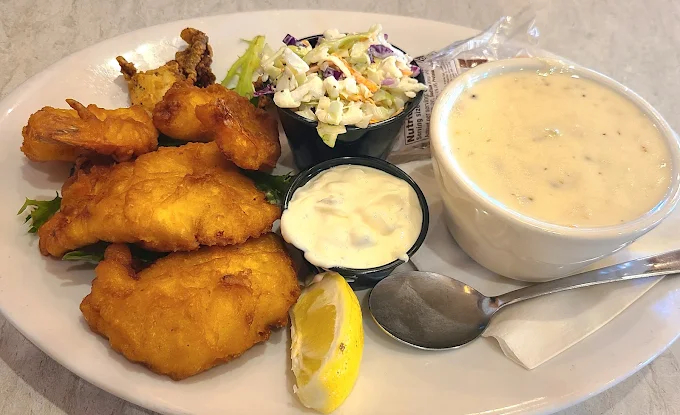
Harbor Light describes its food as straightforward, allowing the ingredients to carry the meal.
That philosophy is especially important when serving seafood.
Fresh salmon does not need to be buried beneath an aggressive sauce. Halibut should retain its clean, mild flavor. Oregon bay shrimp are delicate and naturally sweet. Dungeness crab deserves to taste like crab.
Dungeness crab is one of the defining dishes in our guide to what food Oregon is known for.
The restaurant purchases the freshest ingredients available and supports local fish markets and farmers whenever possible.
That has included salmon, halibut, lingcod, red snapper, albacore tuna, oysters, and local berries used in desserts. Lauree has even purchased albacore tuna directly from the dock.
Buying seafood from the dock is about as close as a coastal restaurant can get to the source.
The process also reflects the realities of operating near an active fishing harbor.
The menu cannot always be disconnected from season, availability, ocean conditions, and market price. Local seafood changes throughout the year. Some catches are plentiful during certain periods and difficult to obtain during others.
That flexibility is one reason Harbor Light features rotating specials showcasing fresh, seasonal, and locally available ingredients.
The specials allow the kitchen to respond to what fishermen, fish markets, and farmers have available rather than forcing every ingredient into a rigid year-round menu.
It gives regular customers something new to anticipate and helps visitors experience foods connected to the season in which they are traveling.
Hand-Dipped Fish And Chips Worth Stopping For
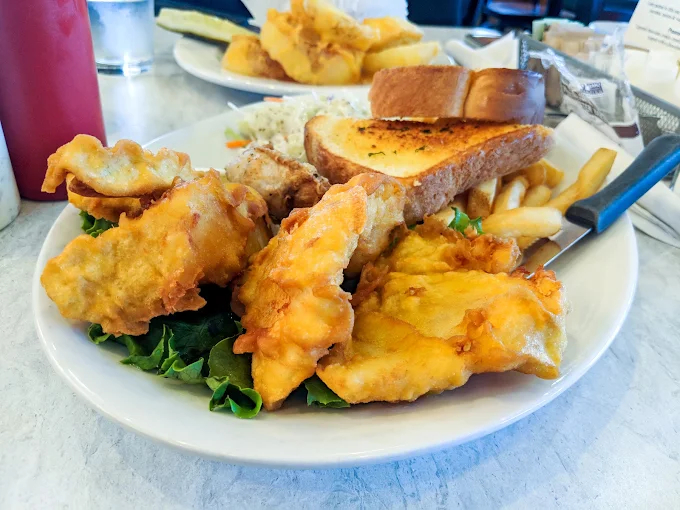
Fish and chips may be the most familiar meal on the Oregon Coast.
That familiarity makes it easy to underestimate how difficult the dish is to execute well.
The ingredients are uncomplicated. There is fish, batter, hot oil, a side, coleslaw, lemon, and sauce.
Because the dish is so simple, every weakness becomes obvious.
The batter can be too thick. The oil can be too cool, leaving the coating greasy. The fish can become dry. A heavy crust can overpower the seafood inside.
Harbor Light’s version begins with Pacific cod dipped in a light tempura-style batter.
The fish is fried until the outside becomes crisp while the cod inside remains moist and flaky. Diners can order three or four pieces, with a choice of fries or the restaurant’s hand-dipped onion rings and a serving of house-made coleslaw.
Those who prefer to avoid fried food can request the cod pan-fried instead.
The flexibility is useful, but the hand-dipped version remains the dish most closely associated with Harbor Light.
A good piece of fried cod should crack gently when a fork enters it. Steam should rise from the white fish inside. The batter should contribute crunch without becoming the dominant flavor.
A squeeze of lemon adds brightness, and tartar sauce brings the familiar creamy tang that belongs beside nearly every plate of coastal fish and chips.
Harbor Light’s fish and chips feel connected to the restaurant’s broader philosophy.
The kitchen is not attempting to reinvent the dish.
It is simply trying to make it properly.
Do Not Overlook The Onion Rings
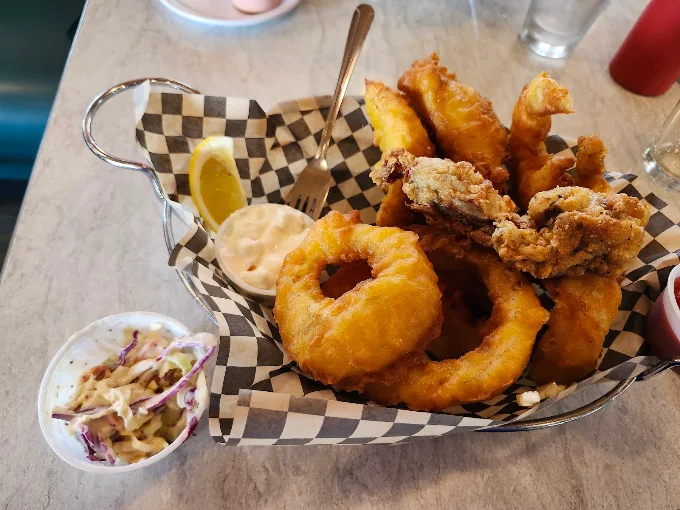
The fish may receive top billing, but Harbor Light’s onion rings have earned their own reputation.
Like the fish, they are hand-dipped rather than removed from a frozen bag and dropped directly into a fryer.
The goal is a light, crisp coating that stays attached to the onion.
That detail matters.
There are few disappointments greater than biting into an onion ring only to pull the entire onion free while leaving an empty shell of breading behind.
A proper onion ring delivers both parts at once.
Harbor Light serves the rings as an appetizer and offers them as a side with seafood baskets, sandwiches, and burgers.
They are the kind of item that tends to disappear while everyone at the table is still pretending to decide what to order.
One person takes a ring while reading the menu.
Another announces that they are only having half.
Someone reaches for the final ring without making eye contact.
By the time the main dishes arrive, the basket is empty and everyone insists they barely had any.
Ordering a second basket may save the table from unnecessary conflict.
Clam Chowder In Several Gloriously Excessive Forms
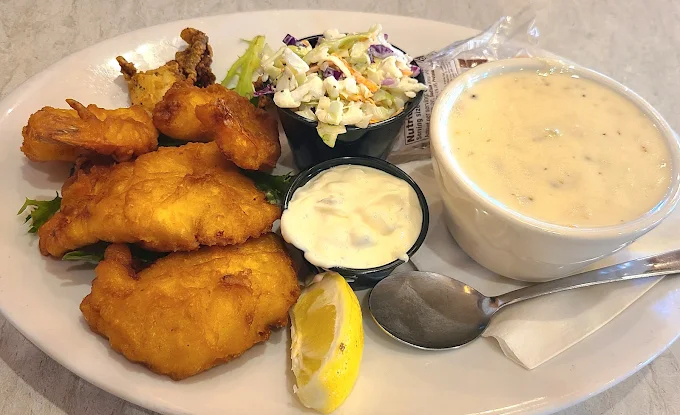
A cup of clam chowder is one of the Oregon Coast’s most reliable comforts.
It makes sense after a foggy morning near the water, a windy walk across the dunes, or a fishing trip that began before sunrise.
Harbor Light serves a classic house clam chowder by the cup or bowl, but it also treats traditional chowder as the starting point for several much larger ideas.
The standard bowl can be paired with cheese bread.
The Clam Chowder Deluxe is topped with Oregon bay shrimp and cheddar cheese, then served with garlic toast.
The Clam Chowder Supreme adds bay shrimp, crab, and the diner’s choice of cheese.
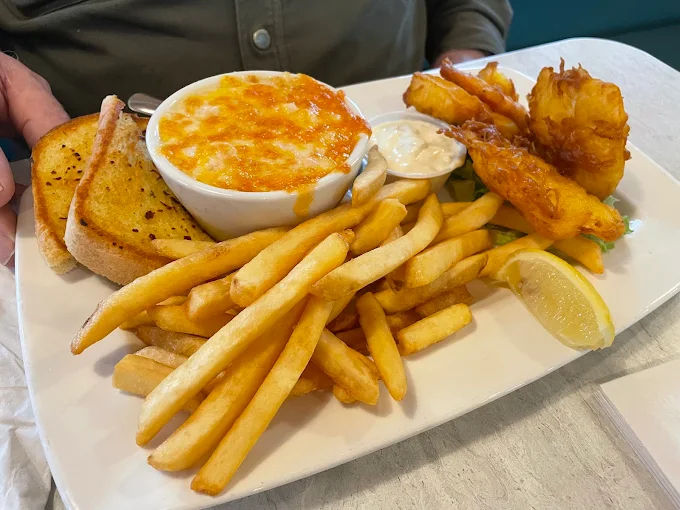
Then there is the Salmon Harbor Clam Chowder, topped with Pacific Northwest smoked salmon and a dollop of sour cream dill sauce. It also arrives with garlic toast.
Each version takes chowder in a different direction.
The Deluxe leans into richness. The bay shrimp add sweetness, while the cheddar melts into the hot soup.
The Supreme becomes a complete seafood meal, piling crab and shrimp onto a creamy bowl that already contains clams.
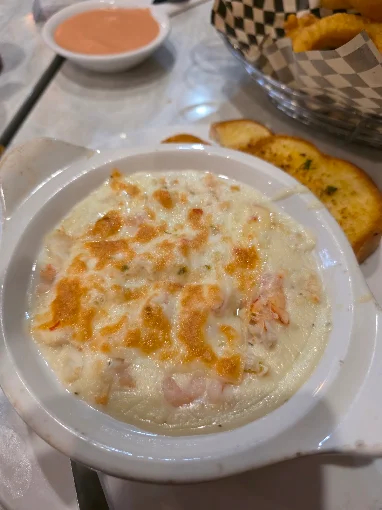
The smoked salmon version may be the most distinctly Northwest of the group. The smokiness adds depth, while dill and sour cream provide a cool, herbal contrast.
There is nothing restrained about these bowls.
They are designed for diners who believe a cup of chowder is good but a cup of chowder topped with seafood and cheese is considerably better.
The Oregon Bay Shrimp Dip Delivers The Full Coastal Experience
The most distinctive item on Harbor Light’s menu may be the Oregon Bay Shrimp Dip.
The dish begins with fresh local bay shrimp served on grilled sourdough bread with cheddar cheese and Thousand Island dressing.
That would already make a satisfying coastal sandwich.
Harbor Light then serves it with a cup of clam chowder specifically intended for dipping.
The restaurant describes it as the full Oregon Coast experience, and that description is difficult to argue with.
The grilled sourdough adds structure and tang. The cheddar provides richness. Thousand Island dressing brings sweetness and acidity, while the bay shrimp offer their gentle, unmistakably coastal flavor.
Then the entire sandwich is lowered into hot clam chowder.
It resembles the classic comfort of grilled cheese dipped in tomato soup, except every part of the dish has been moved to the Oregon Coast.
Tomato soup becomes chowder.
The plain cheese sandwich gains fresh bay shrimp.
Ordinary bread becomes grilled sourdough.
The result is messy, warm, rich, and memorable.
It is not a meal for eating in a hurry or maintaining perfect table manners.
It is a meal for leaning over the plate and accepting that some chowder may reach your fingers.
Seafood Platters For People Who Cannot Decide
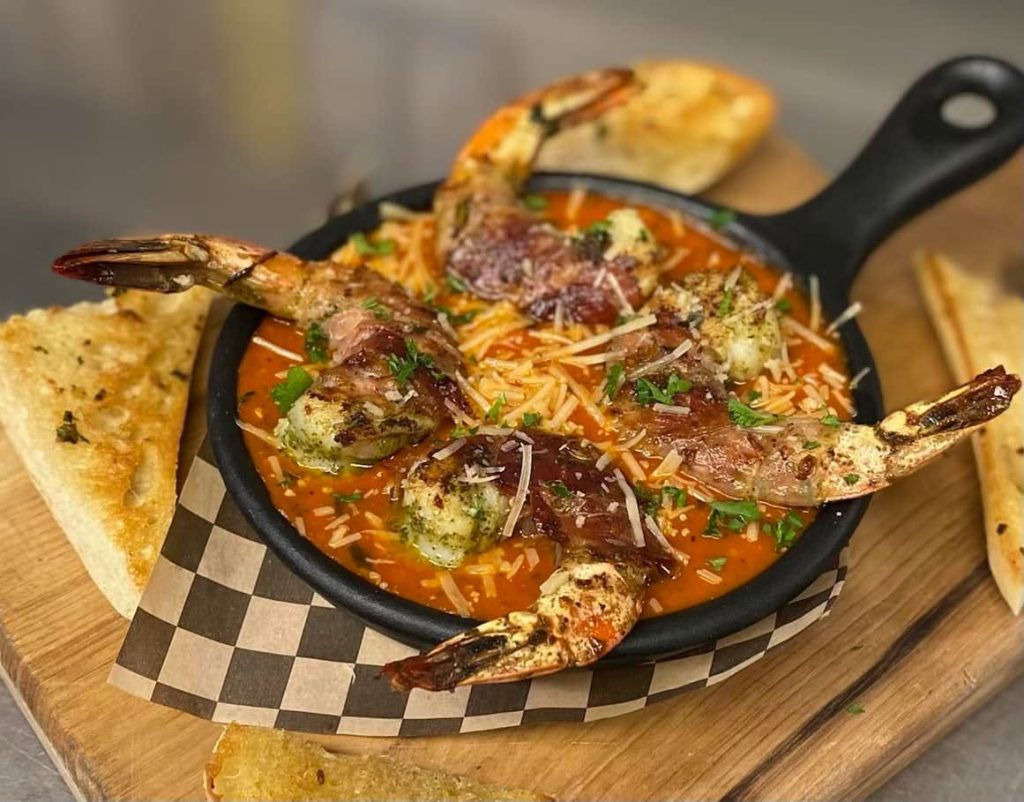
Harbor Light’s seafood favorites section offers combinations designed for diners who want to sample more than one specialty.
The “Fish On” Combo includes cod, wild prawns, house-made coleslaw, garlic bread, and a cup of Deluxe Clam Chowder.
That means the meal combines fried seafood with chowder topped with bay shrimp and melted cheddar.
It is not a light lunch.
The “Clam On” Combo includes clam fritters, clam strips, coleslaw, garlic bread, and a cup of traditional clam chowder.
This platter is for people who genuinely love clams and want them prepared in several ways at once.
Clam strips provide a chewy, briny bite. Fritters are softer and more substantial, with clam flavor worked throughout the batter.
Pair either combo with garlic bread and chowder, and there is little chance anyone will leave hungry.
Harbor Light also serves a combo basket with two wild prawns, two oysters, and two pieces of cod.
The basket is useful for diners who cannot choose between the restaurant’s fried seafood options and would rather stop trying.
Halibut, Prawns And Oysters
Cod is not the only seafood receiving the tempura treatment.
Harbor Light also serves Alaskan halibut in its light batter, with two-piece and four-piece portions available.
Halibut has a firmer texture and a slightly richer flavor than cod. It remains mild enough for diners who prefer clean-tasting fish but substantial enough to stand up well to frying.
Wild prawns are deep-fried and served with a house-made Asian dipping sauce.
The sauce introduces a different flavor profile, bringing sweetness, salt, acidity, and possibly a little heat depending on the day’s preparation.
Oysters are lightly floured and fried, allowing more of their natural briny flavor to come through.
For many diners, fried oysters are a coastal dividing line.
Some people order them immediately.
Others need to be convinced.
The combo basket provides a low-risk way to try them alongside familiar cod and prawns.
A Seafood Pot Pie Made For Rainy Days
There are meals that taste better beneath a bright summer sky, and there are meals that seem created for rain.
Harbor Light’s seafood pot pie belongs firmly in the second category.
The filling combines prawns, halibut, Oregon bay shrimp, and crab in a creamy white sauce touched with sherry and fennel.
Puff pastry covers the top, becoming crisp and golden in the oven.
Breaking into the pastry releases heat and the aroma of seafood, cream, and herbs. Pieces of the flaky crust fall into the sauce, creating the combination of texture that makes a good pot pie so satisfying.
The sherry contributes depth without turning the sauce sweet. Fennel works naturally with seafood, adding a subtle herbal flavor.
Every spoonful may bring something different.
One bite catches crab and pastry.
Another brings halibut coated in sauce.
A third includes shrimp beneath a crisp edge of crust.
This is not a meal designed for someone racing back to the highway.
It asks diners to slow down.
On a gray Oregon afternoon when rain is running down the windows, slowing down feels entirely reasonable.
Elk Shepherd’s Pie Connects The Coast To The Forest
Seafood may dominate Harbor Light’s identity, but the restaurant also recognizes that Reedsport sits between the ocean and a vast landscape of forests, rivers, and mountains.
The elk shepherd’s pie brings that inland Oregon character to the table.
Ground elk is cooked in a savory gravy with wild mushrooms and carrots, then covered with mashed potatoes.
Elk is leaner than conventional beef and carries a deeper, earthier flavor.
Combined with mushrooms, vegetables, gravy, and potatoes, it becomes familiar comfort food with a regional twist.
The dish does not require diners to be adventurous enough to eat something unrecognizable.
It still feels like shepherd’s pie.
The elk simply gives it more personality.
Harbor Light also serves a smoked chicken pot pie filled with potatoes, peas, and carrots beneath puff pastry.
The chicken is smoked on site, allowing the filling to carry a gentle smoky flavor that distinguishes it from an ordinary chicken pot pie.
Meats Smoked Right At The Restaurant
Harbor Light may be best known for seafood, but it also takes smoked meat seriously.
The kitchen smokes chicken and other meats on site, including pork that spends 18 hours in the smoker before becoming the restaurant’s barbecue pulled pork sandwich.
The pulled pork is covered with house-made barbecue sauce, topped with coleslaw, and served on a brioche bun.
Eighteen hours of smoking gives the pork time to become tender while absorbing flavor slowly.
The coleslaw is not merely decoration.
Its acidity and crunch cut through the rich meat and sauce, making the sandwich easier to eat than a pile of pork alone.
Harbor Light’s smoked chicken appears in several places, including a salad topped with bacon, avocado, tomato, and hard-boiled egg.
There is also a smoked tri-tip salad with tomato, avocado, crumbled blue cheese, hard-boiled egg, and crispy onions.
These are technically salads, but no one is likely to finish one feeling as though they ordered the cautious option.
House-Made Dressings And Sauces Matter
One of the clearest signs that a restaurant takes simple food seriously is whether it makes its own sauces and dressings.
Harbor Light prepares its blue cheese, honey mustard, ranch, Thousand Island, and balsamic vinaigrette dressings in-house.
That changes more than the salad course.
Thousand Island appears on the Oregon Bay Shrimp Dip, Crab Louie, Shrimp Louie, and Dungeness Crab Melt.
House barbecue sauce shapes the pulled pork sandwich.
A sour cream dill sauce finishes the smoked salmon chowder.
The wild prawns receive a house-made Asian dipping sauce.
When these components are made in the kitchen, the restaurant can control sweetness, acidity, texture, seasoning, and freshness.
A bottled dressing can make every restaurant taste the same.
A house recipe becomes part of the restaurant’s identity.
The same is true of chowder.
Many coastal restaurants serve it, but the flavor, thickness, seasoning, and texture vary enormously from one kitchen to another.
At Harbor Light, the chowder is not merely a side.
It is one of the foundations of the menu.
Dungeness Crab On Grilled Sourdough
Dungeness crab is one of the defining foods of the Pacific Northwest.
Its meat is sweet, delicate, and rich without needing heavy seasoning.
Harbor Light serves it in several forms, including a Dungeness Crab Melt made with cheddar cheese and Thousand Island dressing on grilled sourdough.
Tomato and avocado can be added.
The sourdough contributes enough tang and structure to balance the rich filling.
Cheddar makes the sandwich more substantial, while Thousand Island connects it to the restaurant’s classic cafe roots.
A crab melt is easy to overcomplicate.
Too much cheese can overwhelm the seafood. Too much sauce can make the bread soggy before it reaches the table.
The purpose should remain clear.
The diner ordered crab and should be able to taste it.
Harbor Light also offers a Crab Louie with Dungeness crab piled over romaine alongside avocado and hard-boiled egg.
The salad is served with classic Thousand Island dressing, and the price depends on the current market.
The Shrimp Louie follows a similar format using wild-caught Oregon bay shrimp.
These dishes feel pleasantly old-fashioned.
They belong to an era of coastal cafes, cold seafood salads, and generous plates arranged without concern for the latest culinary fashion.
Burgers With Elk, Bison, Wild Boar And Wagyu
Not everyone visiting the coast wants seafood.
Harbor Light’s burger menu gives those diners several options, including one of the most unusual patties found in a small Oregon Coast restaurant.
The Wild Burger combines elk, bison, wild boar, and Wagyu beef into an eight-ounce patty.
Each meat contributes something different.
Elk is lean and earthy.
Bison carries a rich flavor similar to beef but with its own character.
Wild boar adds depth and fat.
Wagyu provides additional richness and helps hold the blend together.
The burger sounds adventurous, but it is still served in a familiar form with lettuce, tomato, red onion, and Harbor Light sauce.
The restaurant also offers an elk burger topped with bacon, grilled mushrooms, and onions.
The HL Signature Burger uses a six-ounce Wagyu patty topped with applewood-smoked bacon, caramelized onions, and cheddar cheese.
A traditional Wagyu burger and plant-based Beyond Burger round out the selection.
All can be paired with fries, coleslaw, or those hand-dipped onion rings that seem to make their way into nearly every meal.
Sandwiches Built Like Full Meals
Harbor Light’s sandwiches are not small placeholders for people who could not decide what else to order.
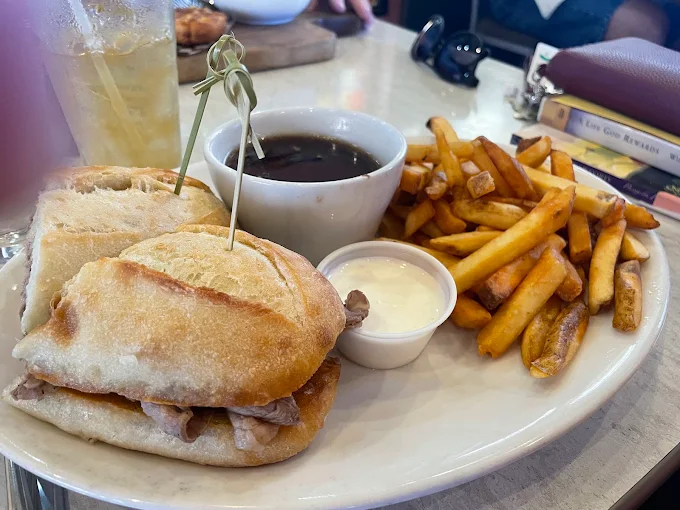
The Prime Rib French Dip features thinly sliced prime rib piled onto a warm baguette, with au jus and horseradish served on the side.
Mushrooms and onions can be added.
The sandwich feels built for cold weather.
The bread softens when dipped into hot jus while retaining enough structure to hold the beef. Horseradish cuts through the richness and gives each bite a little heat.
The restaurant’s BLT combines applewood-smoked bacon, lettuce, tomato, and house pesto mayonnaise on grilled sourdough.
Avocado can be added.
Then there is the 18-hour smoked pulled pork with barbecue sauce and coleslaw.
Every sandwich arrives with a choice of fries, onion rings, or coleslaw, turning it into a complete meal.
Gluten-free bread and buns are also available for an additional charge.
Local Oysters And Seafood From The Dock
Harbor Light’s commitment to fresh ingredients is closely connected to its location.
Reedsport sits only a short drive from Winchester Bay and Salmon Harbor, a community with deep commercial and recreational fishing traditions.
The restaurant supports local fish markets and purchases seafood based on freshness and availability.
That has included salmon, halibut, lingcod, red snapper, albacore tuna, oysters, and Oregon bay shrimp.
Lauree has purchased albacore tuna directly from the dock, shortening the distance between fishing boat and restaurant kitchen.
There is something meaningful about eating seafood close to the place where it was landed.
It turns dinner into part of the landscape.
A plate of tuna, oysters, salmon, or bay shrimp is no longer simply restaurant food. It is connected to boats, weather, tides, fishermen, processors, and the long working history of the Oregon Coast.
That connection is especially fitting in Reedsport, where fishing and fish processing once formed a major part of the local economy.
Desserts Made With Oregon Berries
Harbor Light’s commitment to local ingredients continues after the seafood plates have been cleared.
The restaurant uses fresh local berries in its desserts when available.
The marionberry crisp is the most obvious Oregon choice.
Marionberries were developed in Oregon and remain one of the state’s signature flavors. They are dark, juicy, sweet, and tart enough to avoid becoming cloying when baked into a dessert.
The crisp can be paired with vanilla ice cream, additional marionberry sauce, whipped cream, or whiskey caramel.
Warm berry crisp and cold ice cream require no explanation.
The ice cream begins melting into the fruit and crumbly topping almost immediately, creating a mix of hot, cold, soft, and crisp textures.
Harbor Light also offers chocolate lava cake, peanut butter pie, carrot cake, bread pudding, and vanilla ice cream.
The whiskey caramel makes a natural addition to bread pudding or ice cream.
Saving room after chowder, fish, onion rings, and a sandwich may require planning.
Taking dessert home remains a respectable strategy.
Fresh Marionberry Lemonade And Oregon Drinks
The regional touches extend to the beverage menu.
Harbor Light serves fresh marionberry lemonade along with regular lemonade, iced tea, coffee, hot tea, Arnold Palmers, and fountain drinks.
The berry flavor works naturally with tart lemonade, creating a refreshing drink that feels especially appropriate during warmer weather.
The restaurant also offers Oregon wines and Oregon microbrews.
Pairing an Oregon beer with fish and chips or local seafood makes the meal feel even more connected to the state.
These details are not complicated.
They simply reinforce the sense that Harbor Light understands where it is.
This is an Oregon Coast restaurant, and the menu reflects that without turning regional identity into a gimmick.
A Natural Stop Near Winchester Bay And The Oregon Dunes
Reedsport sits in one of the most distinctive regions of the Oregon Coast.
The town is located near the Umpqua River, Winchester Bay, Salmon Harbor, and the Oregon Dunes National Recreation Area.
Travelers come to fish, crab, camp, ride off-highway vehicles, walk beaches, photograph wildlife, explore coastal forests, and stand beneath dunes that rise like sandy hills above the surrounding landscape.
Harbor Light fits naturally into those outings.
A family can stop for lunch before heading into the dunes.
Anglers can warm up over chowder after a cold morning at the harbor.
Travelers driving Highway 101 can pull in for fish and chips before continuing toward Florence, Coos Bay, or Bandon.
Locals can order burgers, salads, seafood, or pot pies without treating the restaurant as a special-occasion destination.
That combination of visitors and residents is essential.
Tourism may fill tables during the busiest months, but locals sustain restaurants throughout the year.
Harbor Light has earned support from both groups.
Indoor Seating, Outdoor Dining And Takeout
Harbor Light offers indoor seating, outdoor seating, and meals prepared to go.
The flexibility matters on the Oregon Coast, where the weather can shift from pleasant sunshine to wind and drizzle with almost no warning.
Outdoor dining is appealing on calm summer days when the temperature is comfortable and the clouds have finally moved inland.
Indoor seating is often the safer choice.
A bowl of chowder seems even better when rain is moving across the windows and coats are draped over the backs of chairs.
Takeout gives travelers another option.
Fish and chips can return to a motel.
Pot pie can be carried back to a cabin.
Sandwiches can become dinner at a campground or picnic area.
The restaurant’s broad menu also works well for groups.
One person can order seafood.
Another can choose a wild game burger.
Someone else can have a plant-based burger or salad.
Children and cautious diners can stick with familiar sandwiches, fries, cheese bread, or chicken.
No one has to love oysters in order to enjoy Harbor Light.
What To Order On Your First Visit
A first visit should probably begin with the fish and chips.
The hand-dipped Pacific cod is one of the clearest expressions of what Harbor Light does well.
Choose the onion rings as the side and add a cup of clam chowder.
That order covers the restaurant’s most familiar favorites.
Diners looking for something more distinctive should try the Oregon Bay Shrimp Dip.
The combination of grilled sourdough, local shrimp, cheddar, Thousand Island dressing, and chowder for dipping is difficult to find anywhere else.
The seafood pot pie is ideal for rainy weather.
The Salmon Harbor Clam Chowder offers one of the menu’s most distinctly Pacific Northwest combinations.
The Fish On Combo makes sense for a serious appetite, while the combo basket provides cod, prawns, and oysters without requiring a difficult decision.
Those avoiding seafood should consider the Wild Burger, elk shepherd’s pie, prime rib French dip, or 18-hour smoked pulled pork.
Finish with marionberry crisp.
The meal may require a takeout box.
Harbor Light is unlikely to consider that a problem.
A Restaurant That Grew Alongside Reedsport
Harbor Light’s history mirrors the history of Reedsport itself.
It began in 1950 during the era of drive-ins and roller-skating carhops.
It became the Skylark Cafe as the town’s logging, milling, paper, fishing, and fish-processing industries supported a thriving local economy.
It adapted as those industries changed and the Oregon Coast became an increasingly popular travel destination.
For the past 40 years, the Serang family has guided the restaurant through its latest chapter.
Lauree has updated the food, atmosphere, and appearance while holding onto the qualities that helped the restaurant survive.
The meals remain approachable.
The welcome remains friendly.
The kitchen continues cooking from scratch.
Fresh seafood remains central.
Local farmers, fish markets, fishermen, Oregon wineries, and craft breweries still have a place in the restaurant’s story.
That continuity gives Harbor Light something newer restaurants cannot manufacture.
It has memory.
Local families have eaten here for years.
Travelers have built the restaurant into repeated coastal trips.
The building has watched Reedsport change outside its windows while continuing to serve people who walk through the door hungry.
More Than A Plate Of Fish And Chips
It would be easy to describe Harbor Light as a good place for fish and chips and leave it at that.
The fish and chips are certainly important.
They are hand-dipped, light, crisp, and exactly the kind of meal travelers hope to find near the ocean.
But Harbor Light’s appeal goes deeper.
It is found in Lauree learning to cook beside her Yugoslavian grandmother at eight years old.
It is found in tuna purchased directly from the dock.
It is found in house-made dressings, local oysters, fresh berries, and meat smoked behind the scenes for hours.
It is found in a sandwich filled with Oregon bay shrimp and served with clam chowder for dipping.
It is found in a seafood pot pie under puff pastry and a burger built from elk, bison, wild boar, and Wagyu.
It is found in the history of a restaurant that began with roller-skating carhops while Reedsport’s mills and fishing plants were humming.
Harbor Light has endured because it understands the difference between feeding people and creating a meal they remember.
The food is not fussy.
It is flavorful.
The portions are not designed to leave anyone wondering what comes next.
The restaurant does not attempt to separate itself from Reedsport’s working-class roots or coastal identity.
It embraces both.
That may be why Harbor Light continues attracting locals, road-trippers, fishermen, families, and visitors from across the country.
People may arrive because they heard about the fish and chips.
They leave remembering the entire place.
Know Before You Go
Harbor Light Restaurant is located in Reedsport on the southern Oregon Coast.
The restaurant offers indoor dining, outdoor seating, and takeout.
The menu includes hand-dipped fish and chips, halibut, prawns, oysters, clam chowder, seafood platters, savory pot pies, salads, sandwiches, smoked meats, burgers, desserts, Oregon wine, and Oregon microbrews.
Seasonal specials may feature fresh seafood, local produce, and berries based on current availability.
Hours, menu items, prices, and specials can change, so travelers should confirm current information directly with the restaurant before making a special trip.
Harbor Light is the kind of Oregon Coast restaurant that feels inseparable from the community around it.
Its story began in 1950 with carhops gliding between parked cars.
It continued through Reedsport’s busiest logging and fishing years.
It entered a new era under the Serang family, who have spent four decades shaping it into the restaurant visitors know today.
Through every change, the purpose has remained familiar.
Serve people well.
Cook with care.
Use good ingredients.
Make them feel welcome.
And send them back out onto the Oregon Coast full, warm, and already thinking about what they will order next time.