There are moments along the Oregon coast that don’t feel real.
Not the kind you photograph and move on from. The kind that stop you mid-step, make you question what you’re seeing, and stick with you long after you’ve left the shoreline.
This is one of those moments.
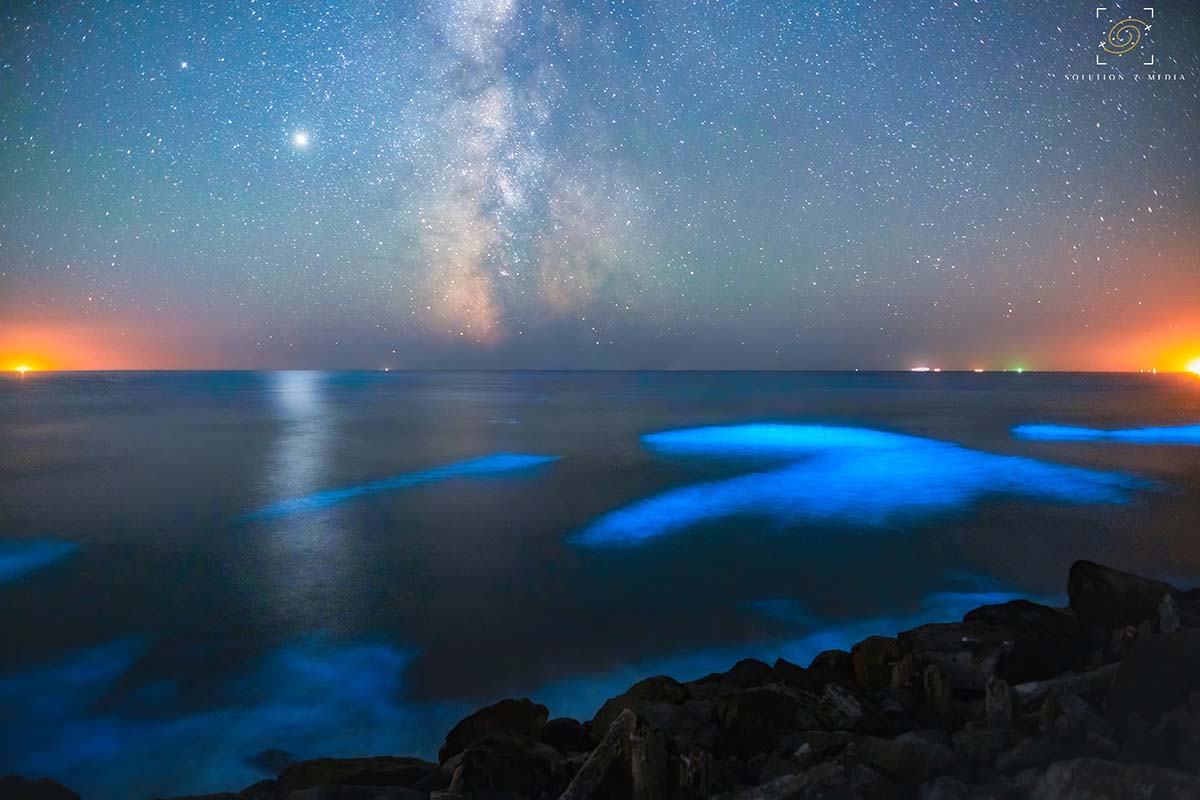
Under the right conditions, on the right night, the ocean itself can begin to glow. Not faintly. Not something you need a camera to capture.
Bright. Electric. Blue.
And yes, you can see it with your own eyes.
When The Ocean Lights Up
What you’re seeing isn’t magic, even though it feels like it.
It’s bioluminescence, a natural phenomenon caused by microscopic marine organisms called dinoflagellates, a type of phytoplankton often associated with what’s known as a “red tide.”
When these tiny organisms are disturbed by movement like crashing waves, footsteps in the sand, or even your hand moving through the water, they emit a brief flash of light.
Scientists believe this glow acts as a defense mechanism, either startling predators or attracting larger ones to scare them off.
On their own, the flashes are nearly invisible.
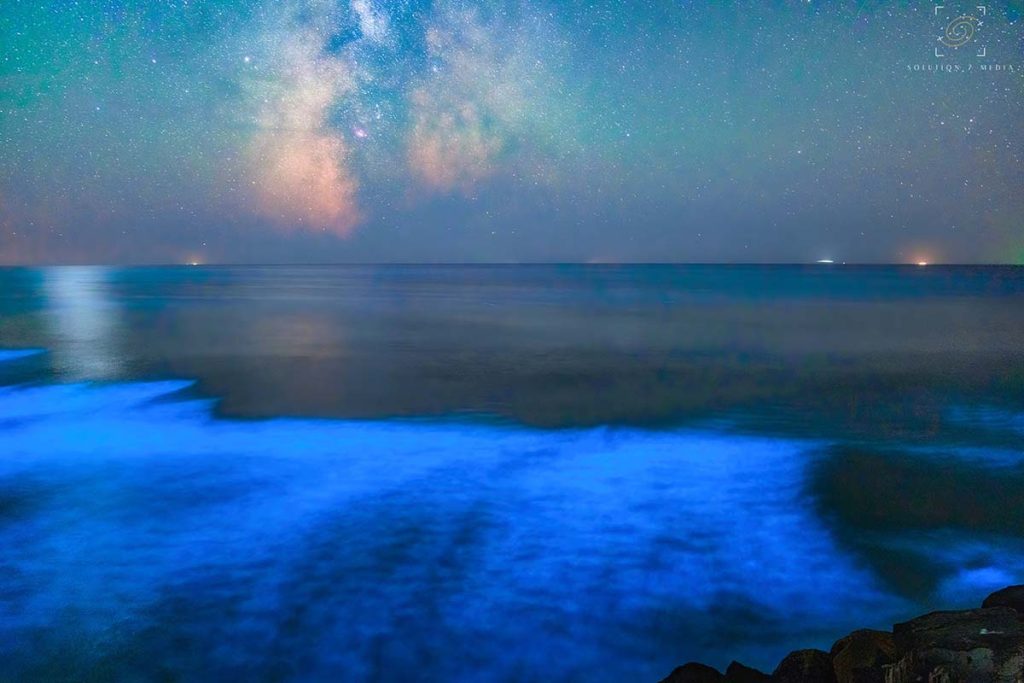
But when millions of them react at once, the effect transforms the ocean into something surreal.
Waves break and suddenly glow like streaks of neon.
Footsteps leave behind sparkling trails.
The shoreline starts to feel alive.
It’s Not Just For Cameras
One of the biggest misconceptions is that this is something only photographers can capture.
That’s not true.
If conditions are right, the glow is absolutely visible to the naked eye. No long exposure. No editing tricks. Just your eyes adjusting to the darkness.
That means no phone screens. No headlights. No artificial light.
Give it fifteen to twenty minutes. Let your eyes fully adjust.
Then watch.
When a set of waves rolls in and breaks, you’ll see it. That sudden flash of blue lighting up the surf like something out of a sci fi movie.
The Night That Put Oregon On The Map
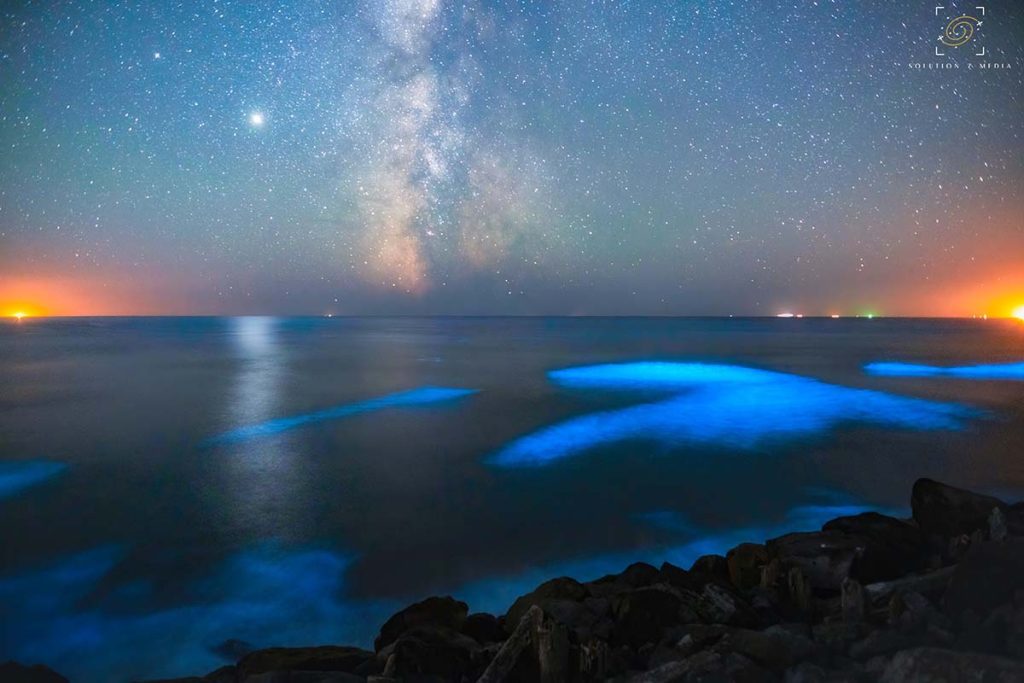
Back in 2020, we covered this exact phenomenon after Oregon photographer Steven Smith of Solution 7 Media captured it in a series of unforgettable images along the coast.
Those photos, many of which you’ll see again here, weren’t exaggerated.
They weren’t enhanced beyond recognition.
They were real.
Smith and his shooting partner Alex Barnedt spent six nights chasing the glow from Pacific City to Astoria. Night after night, waiting, watching, hoping the conditions would line up.
And when they did, the result looked like something pulled straight out of another world.
Where You Might See It
Bioluminescence isn’t guaranteed, but when it does show up, certain areas along the Oregon coast tend to give you a better shot.
Cannon Beach
Fort Stevens
Pacific City
Lincoln City
Newport
Yachats
Manzanita
Nehalem Bay
Yaquina Bay
Anywhere with active surf and minimal light pollution becomes a potential viewing spot.
Elevated viewpoints like the observation deck at Fort Stevens can give you an even better look at waves lighting up as they crash.
Timing Is Everything
You can’t just show up at the coast and expect it to happen.
Everything has to line up.
Late summer into early fall tends to offer the best chances. Warmer water conditions help increase the presence of the organisms responsible for the glow.
You’ll want:
- A dark night with little to no moonlight
- Active waves breaking on shore
- Minimal artificial light nearby
- Patience
Sometimes it happens right away. Other times you wait.
And sometimes, it doesn’t happen at all.
That unpredictability is part of what makes it so special.
The Moment It Happens
You’ll know.
It starts subtle. Maybe a faint flicker in a breaking wave. Easy to miss if you’re not looking for it.
Then another.
Then suddenly, a full wave rolls in and the entire edge of the ocean lights up electric blue.
That’s when people start laughing. Shouting. Running down the beach like kids.
Because no matter how many photos you’ve seen, nothing prepares you for watching it happen in real life.
You Can Trigger It Yourself
Here’s where it gets even better.
Walk along the wet sand and shuffle your feet.
Every step can leave behind tiny glowing sparks.
Drag your hand through the water and watch it light up around you.
Some people even wade into the surf, watching their bodies glow with every movement like something straight out of a dream.
It’s interactive. Immediate. And completely unforgettable.
Why It Feels So Rare
In tropical locations, bioluminescence is more common.
Here in the Pacific Northwest, it’s different.
It shows up in bursts. In waves. Sometimes for a few nights, sometimes longer, sometimes not at all for stretches of time.
That rarity is what makes it special.
You’re not just seeing something beautiful.
You’re catching a moment that doesn’t happen every night, in a place that doesn’t always give it up easily.
Worth The Wait
Standing on a dark Oregon beach, waiting for something you might not even see, isn’t most people’s idea of a sure thing.
But when it happens, it’s one of the most surreal experiences you can have on the coast.
The ocean glows.
The sand sparkles beneath your feet.
And for a few moments, Oregon feels like another planet entirely.
Can you really see bioluminescence with the naked eye?
Yes, you absolutely can. When conditions are right and your eyes have adjusted to the dark, the glow is clearly visible without a camera. It often appears as electric blue flashes in breaking waves or tiny sparks in the sand as you walk.
What causes the ocean to glow blue?
The glow comes from microscopic organisms called dinoflagellates. When they’re disturbed by motion like waves, footsteps, or movement in the water, they emit light as a defense response.
What time of year is best to see bioluminescence in Oregon?
Late summer through early fall typically offers the best chances. Warmer ocean conditions help increase the presence of the organisms responsible for the glow, though sightings are never guaranteed.
What time of night should I go?
The darker, the better. Head out well after sunset and avoid nights with a bright moon. The less light pollution, the easier it is to see the glow.
Where are the best places to see it on the Oregon coast?
Some of the most commonly reported spots include Cannon Beach, Fort Stevens, Pacific City, Newport, and areas around Nehalem Bay and Yaquina Bay. Any dark beach with active waves gives you a chance.
Do I need a camera to see it?
No. While cameras can capture stunning long-exposure photos, the glow is often visible in real time if conditions are right.
How long does bioluminescence last?
It varies. Sometimes it shows up for a few nights in a row, other times it disappears just as quickly. There’s no set schedule, which is part of what makes it so rare.
Can I trigger the glow myself?
Yes. Walking along wet sand, shuffling your feet, or moving your hand through the water can cause the organisms to light up, creating glowing trails and sparks.
Is it safe to swim in bioluminescent water?
Generally, yes. However, always be cautious of ocean conditions like strong waves, cold water, and currents along the Oregon coast.
Why don’t we see this all the time in Oregon?
Bioluminescence depends on very specific conditions like water temperature, plankton concentration, and wave activity. Unlike tropical regions, it appears more unpredictably here in the Pacific Northwest.
We hope you enjoyed this article. Feel free to keep browsing the Oregon coast here for more adventures.