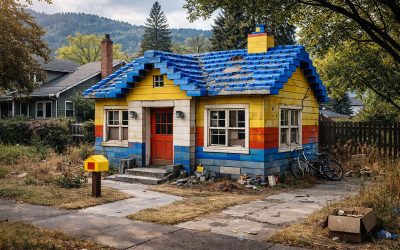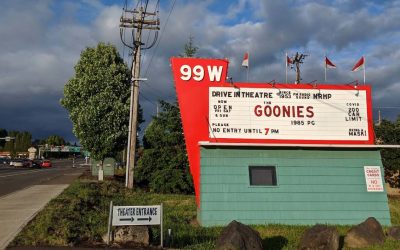
A couple summers ago, we were already a few days into a laid-back stay in Astoria, soaking in the kind of slow coastal rhythm that makes you forget what day it is. That particular morning, we had a loose plan to show the kids a couple of The Goonies spots—the house perched up on the hill and the old bowling alley where Chunk famously splattered his milkshake on the window, which, amazingly, is still open and hasn’t changed much at all. Somewhere in between all of that, the Astoria Column came up almost as an afterthought. It wasn’t the main plan for the day, just one of those “we might as well check it out” stops. Funny enough, it ended up being the part we’re still talking about.
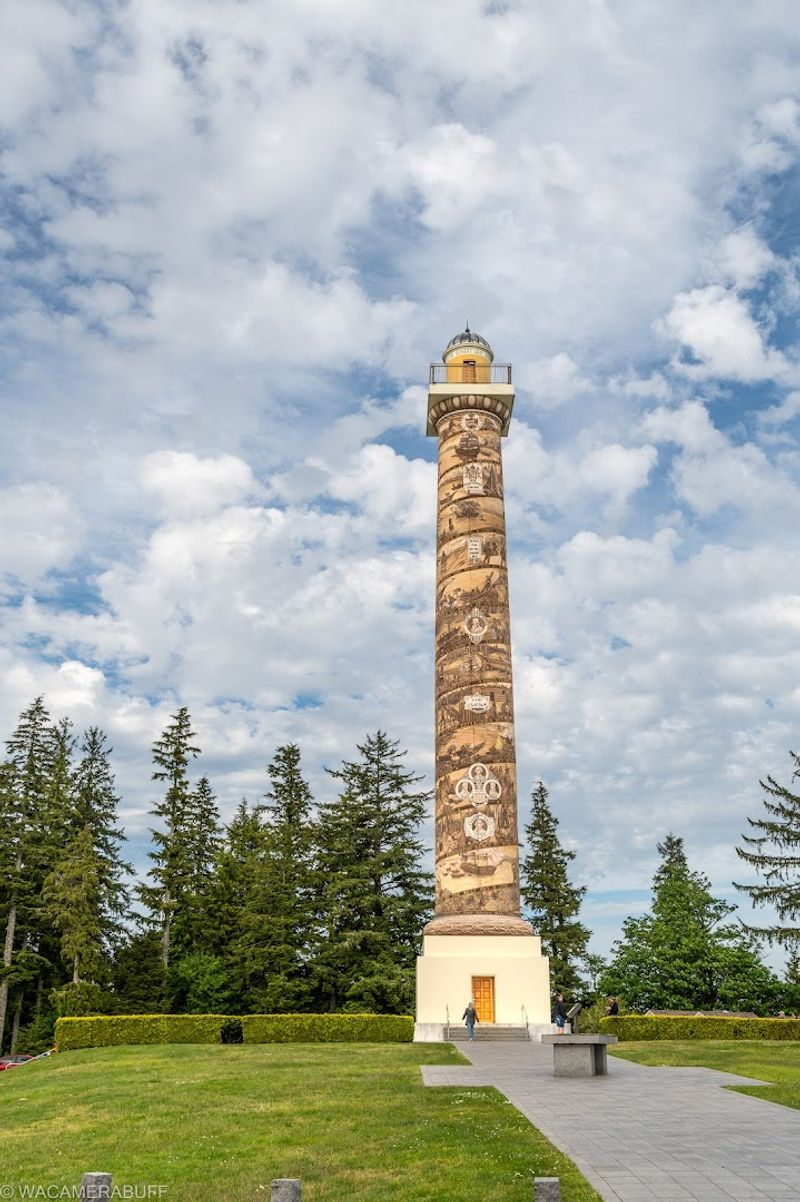
We pulled into the parking area at the top of Coxcomb Hill, stepped out into that steady coastal breeze, and there it was rising above us. Tall, weathered, and somehow more impressive in person than any photo had made it seem. There’s something about the way it stands above everything else that immediately draws you in. Before we even made it inside, we found ourselves slowly circling the base, taking it all in.
Up close, the column tells its story before you ever climb a single step. The entire exterior is wrapped in a continuous spiral mural that winds all the way to the top, depicting key moments in Pacific Northwest history. You can follow it like a timeline, starting with Native life and moving through early exploration and settlement. It’s not just a monument you look at. It’s one you experience as you move around it, and with kids, that kind of visual storytelling makes a difference. It gives context to a place in a way that sticks.
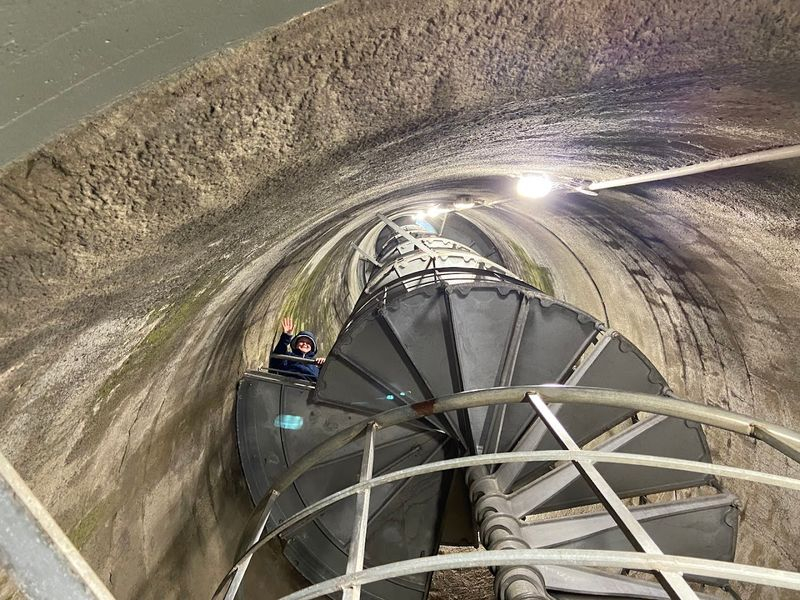
Eventually, we made our way inside and started the climb. The staircase is narrow and spirals upward through 164 steps, with small landings spaced out along the way. The kids moved ahead with plenty of energy, while I took it a little slower, feeling it more with each turn. There’s a rhythm to the climb, though, and the higher you go, the more you feel pulled toward the top. You start to hear the wind before you see the light, and that’s when you know you’re close.
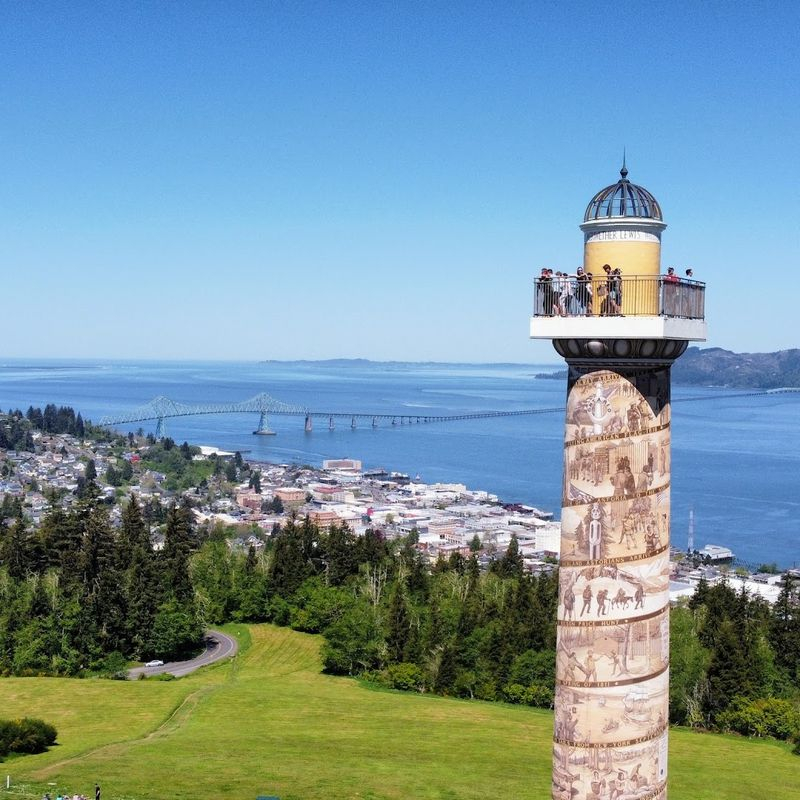
Stepping out onto the top platform is one of those moments that instantly justifies the effort. The Columbia River stretches out wide below, the Astoria-Megler Bridge cutting across it in the distance. Forested hills roll out in every direction, and on a clear day, you can see far enough to catch hints of the Pacific Ocean. It’s expansive in a way that’s hard to put into words, and for a moment, everything just slows down. Even the kids paused, taking it in.
What stood out most about the experience wasn’t just the view or the history, but how naturally it all came together. The climb, the mural, the setting—it all feels intentional without being overdone. Nothing about it feels overly commercial or forced. It’s simply a place that has stood the test of time and continues to do exactly what it was meant to do.
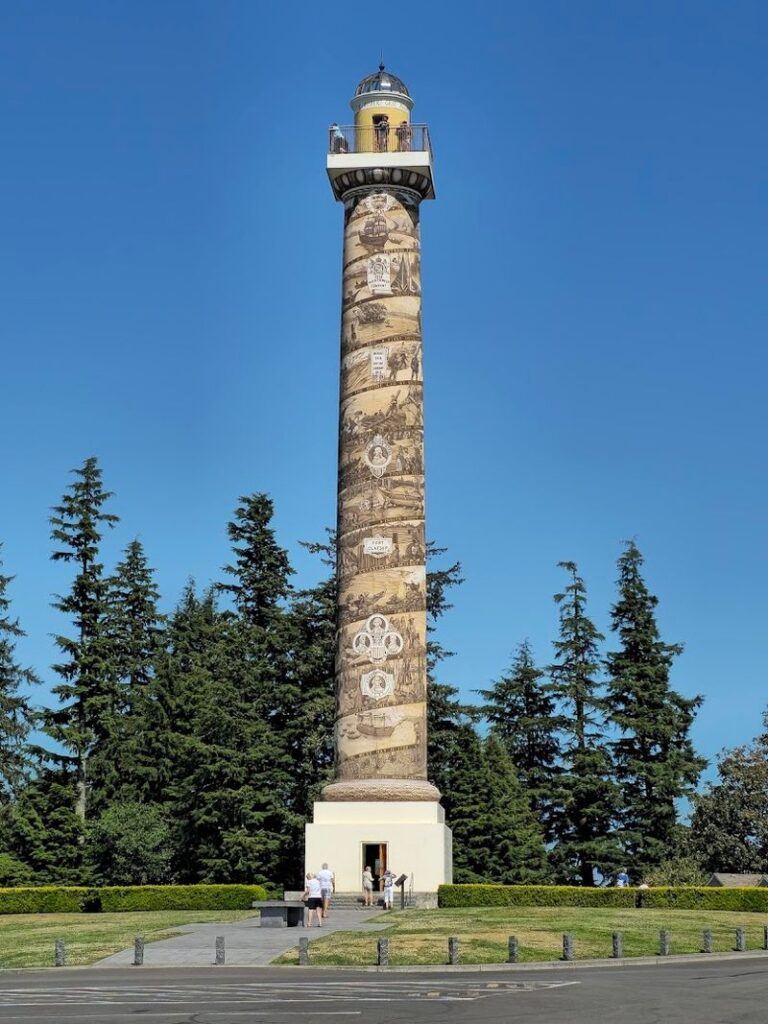
Built in 1926, the Astoria Column was designed to honor the history of the Pacific Northwest, and now, a century later, it still carries that purpose with quiet confidence. Despite years of coastal weather, it remains remarkably well preserved, and the story it tells is just as clear today as it was when it was first completed.
If you’re heading to Astoria, it’s worth giving this stop more time than you think. Walk the full circle around the base, take the climb at your own pace, and spend a few extra minutes at the top. The town itself is worth exploring too, with its waterfront views, historic homes, and deep connection to the river and the sea. The column doesn’t stand apart from Astoria. It feels like the place where everything comes together.
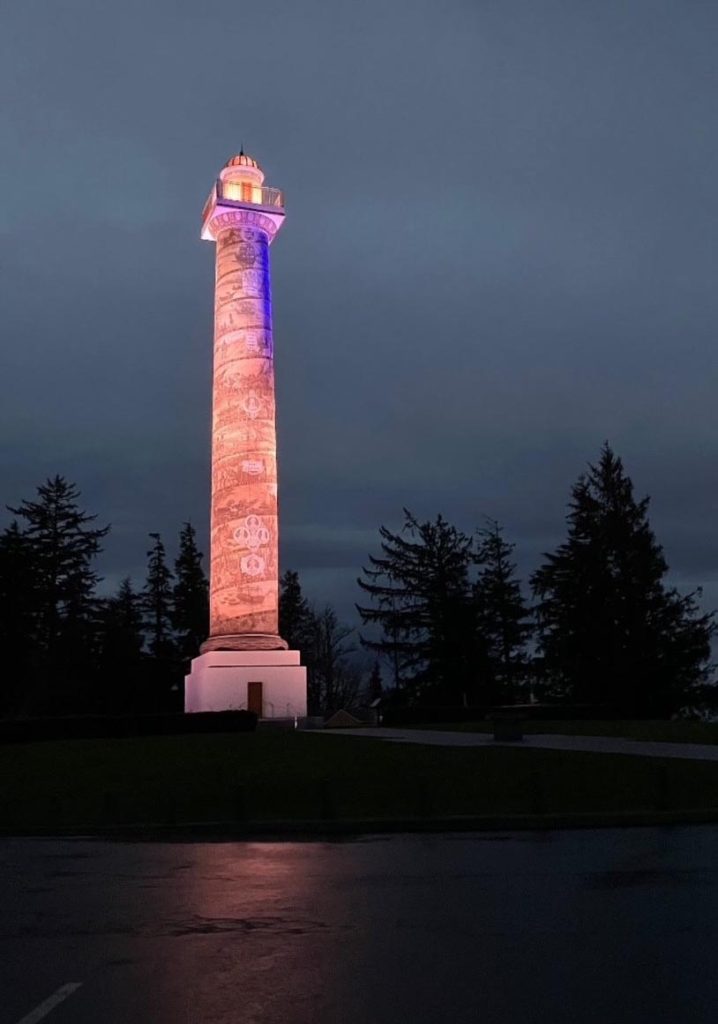
In 2026, as the Astoria Column turns 100 years old, it doesn’t feel like a relic of the past. It feels like something that’s still very much part of the present. People continue to climb it, stand at the top, and take in the same views that have been inspiring visitors for generations. It’s a simple experience, but one that leaves a lasting impression, especially when shared with the people you care about.
FAQ About Visiting the Astoria Column
How many steps are in the Astoria Column?
There are 164 steps to reach the top. It’s a steady spiral climb, but there are small landings along the way where you can pause and catch your breath.
Is the Astoria Column suitable for kids?
Yes, and it’s actually a great stop for families. Kids tend to enjoy the climb and the open space around the column, though younger children should be supervised closely on the staircase.
How long does it take to visit the Astoria Column?
Most visits take about 60 to 90 minutes, depending on how long you spend at the top and walking around the grounds.
Is there a fee to visit the Astoria Column?
There is a small parking fee, and it goes toward maintaining the site. It’s typically just a few dollars.
What are the hours for the Astoria Column?
The grounds are generally open daily from 5 AM to 9 PM, though hours can vary slightly depending on the season.
When is the best time to visit?
Early mornings tend to be quieter and often offer clearer views. Late afternoon can also be beautiful, especially when the light hits the river.
Is the climb difficult?
It’s manageable for most people, but it is a steady climb. Taking your time makes all the difference, and there’s no rush to get to the top.
Can you see the ocean from the top?
On clear days, you can catch glimpses of the Pacific Ocean in the distance, along with sweeping views of the Columbia River and surrounding landscape.
Address: 1 Coxcomb Dr, Astoria, OR 97103
Hours: Open daily from 5 AM to 9 PM