There are some places that fade quietly into history.
And then there are places that refuse to die because too many people still remember exactly how they sounded.
I was born in 1981, which means I just missed the full force of Organ Grinder Restaurant. By the time I was old enough to form real childhood memories, the restaurant was already well established, already legendary, already woven into Portland family traditions. It would close in February of 1996, when I was fourteen. Old enough to remember hearing about it. Young enough to never have truly experienced it in its prime.
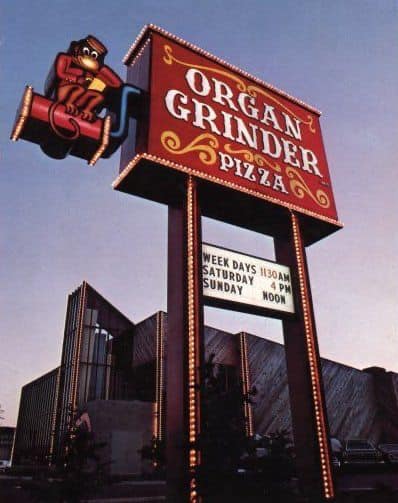
So I have to learn about Organ Grinder through you.
Through stories.
Through photos of towering pipes climbing cedar walls.
Through the way longtime Portlanders still grin when you say, “Remember the Organ Grinder?”
And if you were there, you do not just remember eating pizza. You remember feeling the room shake.
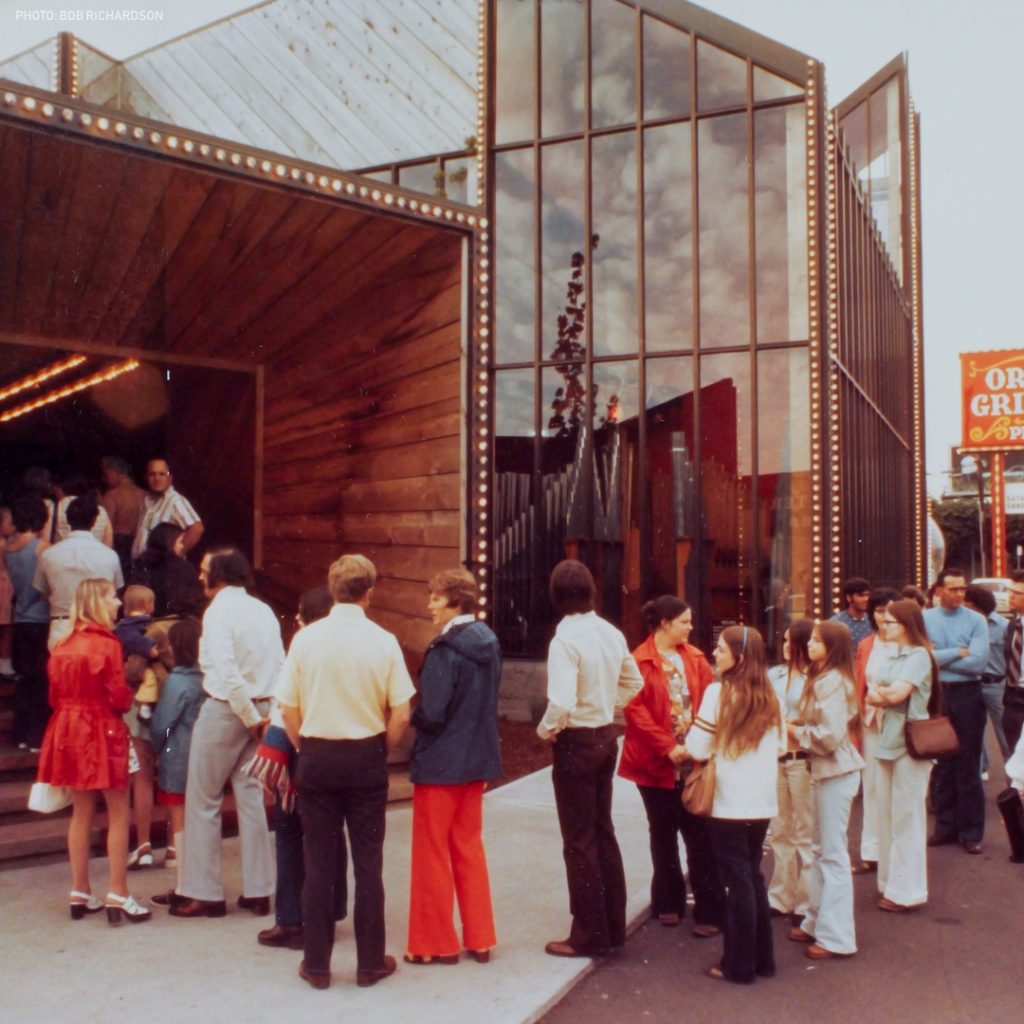
Organ Grinder opened on August 26, 1973, at 5015 Southeast 82nd Avenue between Foster and Holgate. The original private opening was for members of the American Theatre Organ Society. It opened to the public a month later, on September 27. From the beginning, it was not just another “pizza and pipes” gimmick. It was a full-scale theatrical production disguised as a pizzeria.
The partnership behind it included the Forchuk brothers and organ expert Dennis Hedberg. The Forchuks provided financing. Hedberg brought the vision and the obsession. Because this was not about background music. Hedberg’s goal was to assemble an organ that included every major voice Wurlitzer ever produced.
And he nearly did.
The instrument started as a 3-manual, 13-rank organ from Portland’s Oriental Theatre. Then came additions from everywhere. Vox Humana pipes from the Liberty Theatre. A 32-foot Contra Bourdon from Boston’s Old North Church. Tympani from the Brooklyn Fox. Parts from Chicago, Cleveland, Denver, Maine. Even a dive alarm from a submarine.
By 1988, the instrument had grown to 51 ranks and nearly 4,000 pipes, becoming the largest Wurlitzer theatre pipe organ in the world.
Four thousand pipes.
Imagine sitting down for pizza while one of the most powerful theatre organs on the planet towers over you.
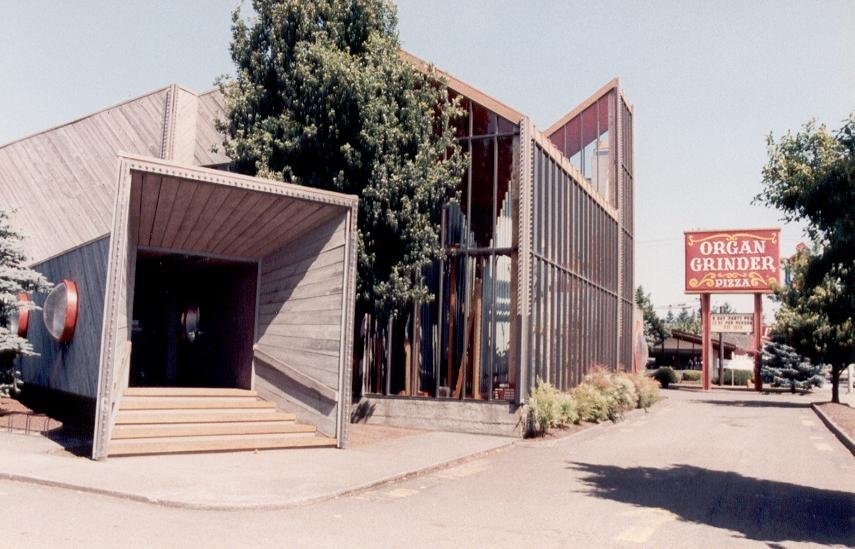
The building itself was designed to resemble an oversized Diaphone resonator. Architect Will Martin created a structure that felt dramatic before you even walked inside. The organ pipes were housed in glass chambers visible from inside and outside the restaurant. Refrigeration equipment weighing twenty tons maintained a constant temperature so the instrument would stay in tune.
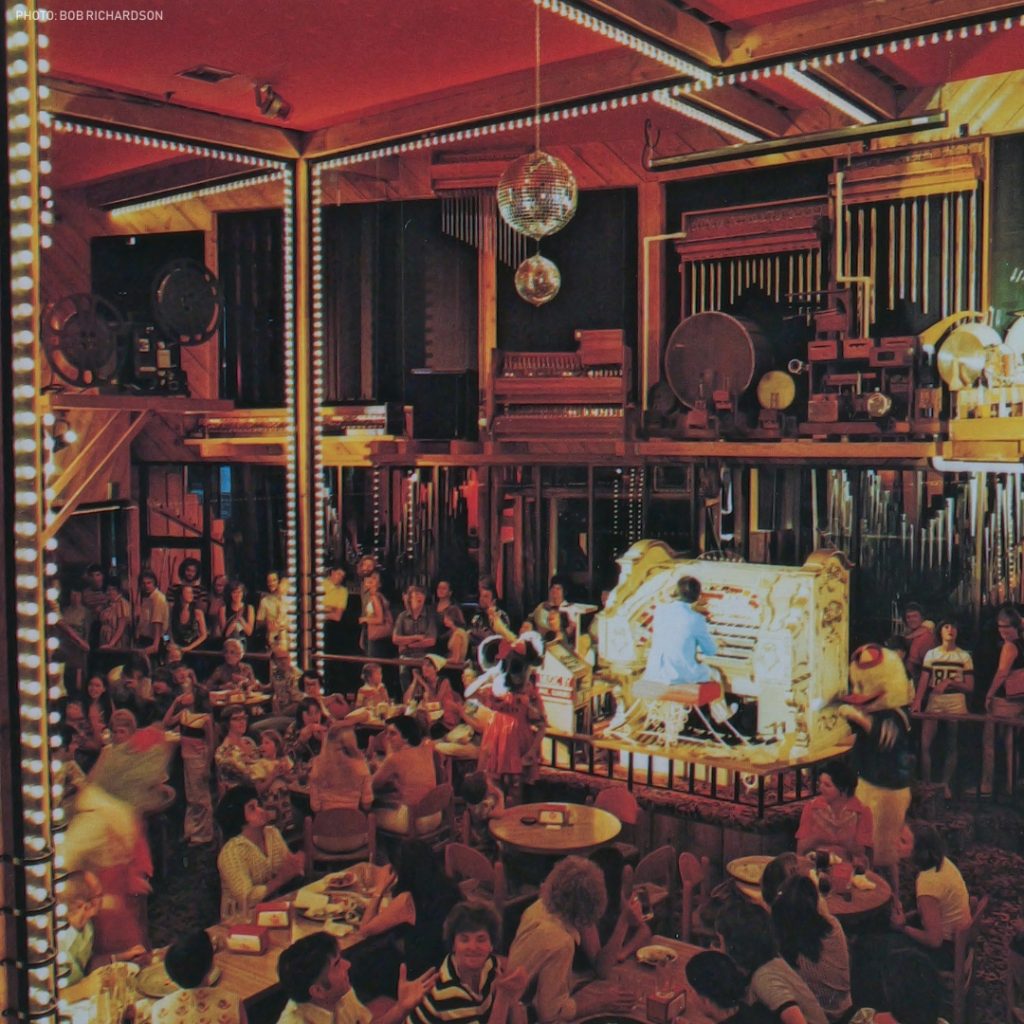
Inside, unfinished cedar walls wrapped the space in warmth. Marquee lighting glowed at ceiling divisions. The organ console sat in the center of the dining floor like a throne. The restaurant seated 450 people across three levels, including a balcony.
And it was loud.
Gloriously loud.
People who were there say you could feel the low notes in your ribs. Silverware trembled. Conversations paused mid sentence when the organist launched into a big number. The organ did not just play music. It played sound effects. Car horns. Bird whistles. Thunder rolls. Percussion crashes. It could whisper softly and then erupt into something that felt like the finale of a Broadway show.
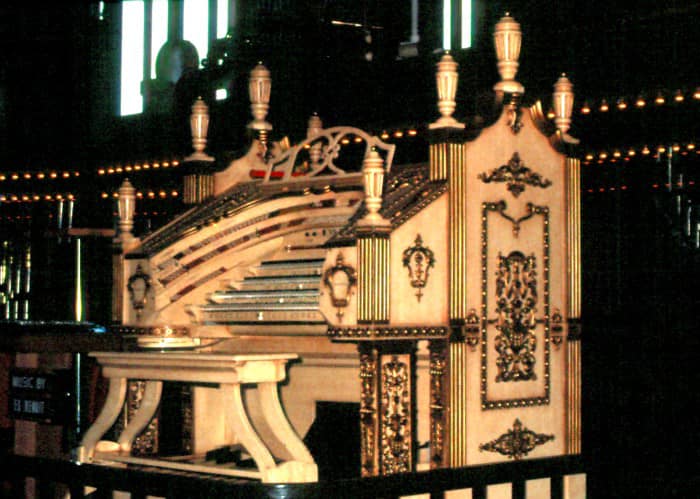
The organist sometimes rose dramatically from below the stage on a hydraulic lift. A mechanical cymbal playing monkey joined in during Sousa’s Washington Post March. There was even a live monkey named Pizza Pete who wandered the dining room with a tin can begging for tips alongside a hurdy gurdy player.
Yes. A live monkey.
Bubble machines filled the ceiling with floating foam to delight kids. A costumed character named Mitzi Mouse entertained families. Silent movies were shown on the hour, accompanied live by the organ just as they had been in the 1920s.
On Sundays, the restaurant hosted Old Time Gospel performances.
This was not dinner.
This was theatre.
And Portland showed up.
In its early days, Organ Grinder averaged $8,000 per night in sales. Families drove in from suburbs and across town because it was centrally located on 82nd Avenue and easy to reach before I-205 changed traffic patterns. It became the birthday destination. The anniversary destination. The place where out of town relatives were taken to experience something uniquely Portland.
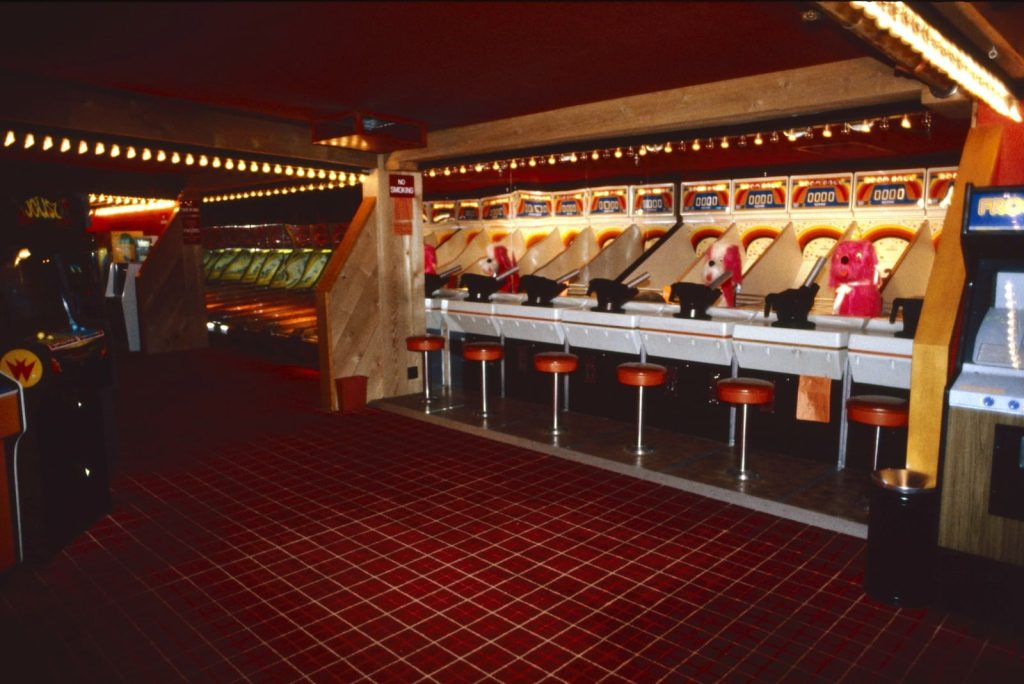
The pizza itself was Italian style and, by many accounts, better quality than most pizza and pipes restaurants. Thick crust. Generous toppings. Bubbling cheese. There was even a taco pizza called the Percussion Pizza. Onion rings were a favorite.
There was a hiccup at one point when outdated dough equipment could not keep up with demand, forcing the restaurant to use frozen dough for a period. That hurt its culinary reputation for a while. But people did not come only for the crust.
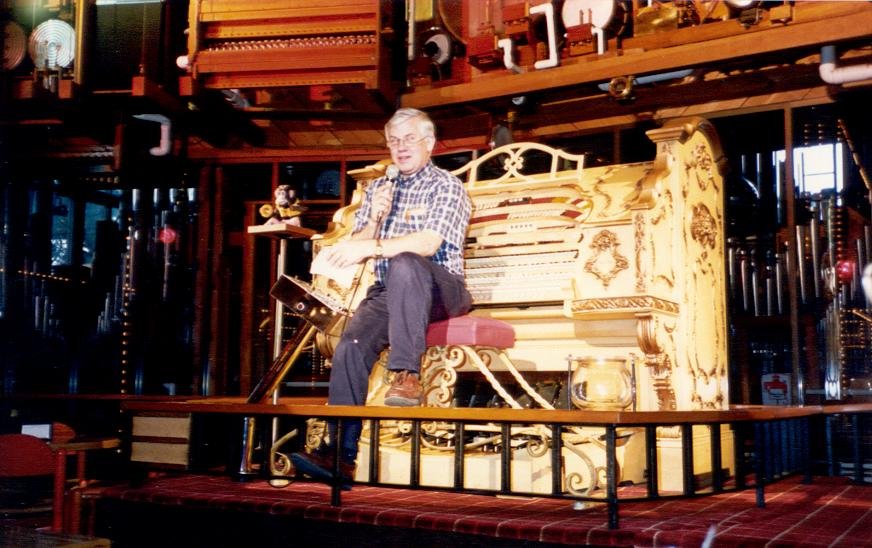
They came for the pipes.
A second Organ Grinder opened in Denver in 1979, built using additional organ parts Hedberg had acquired. But while Portland’s location endured for more than two decades, Denver’s closed in 1988. The Portland restaurant became fully owned by Hedberg in 1985 and continued on until 1996.
Its decline was not sudden but gradual. The opening of I-205 in 1982 shifted traffic patterns and hurt businesses along 82nd Avenue. A Chuck E. Cheese opened nearby in the mid 1980s, pulling family entertainment dollars. Financial troubles unrelated to the restaurant affected one of the original partners. Earthquake Ethel’s, a Portland nightclub connected to the same partnership, failed. Maintenance costs mounted. By late 1995, roof repairs and parking lot maintenance were needed and funding was thin. Attempts to relocate or find investors did not succeed.
In February 1996, the Organ Grinder closed permanently.
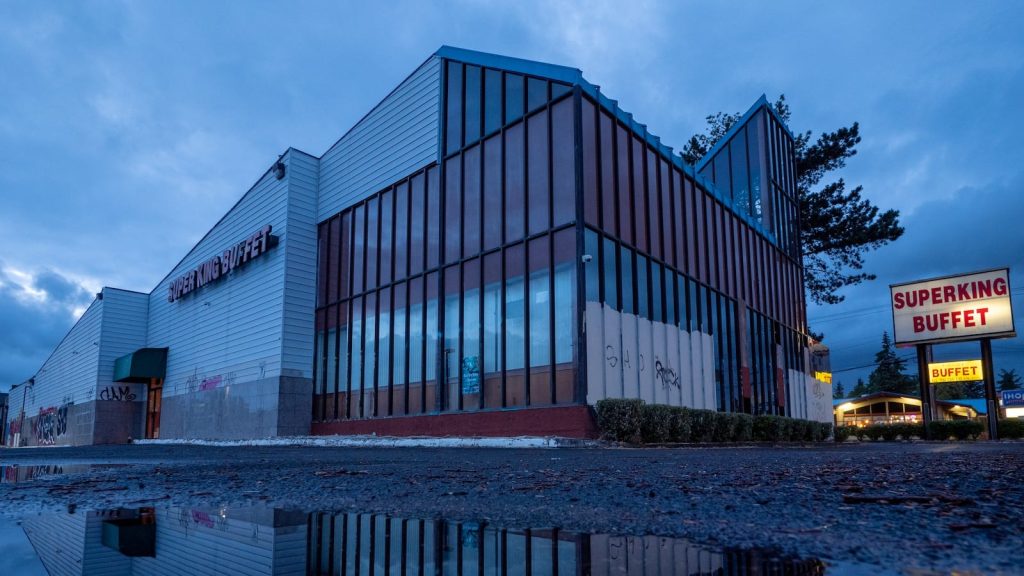
When it did, the organ was sold for parts. The massive Diaphone pipes went to Organ Stop Pizza in Mesa, Arizona. The console was moved to Groton, Massachusetts. Pieces of Portland’s pizza palace scattered across the country.
But if you talk to the people who sat beneath those pipes, they will tell you something important.
The sound never really left.
The Echo That Still Lives in Portland
I have talked to enough Oregonians to know this was not just another themed restaurant.
When you mention Organ Grinder, faces soften. Voices shift. People lean back in their chairs and say things like, “Oh man,” before launching into stories.
They remember sticky red plastic cups.
They remember writing song requests on napkins.
They remember craning their necks upward toward the glass pipe chambers.
They remember being six years old and believing that building was the most magical place in the world.
They remember Portland before it tried so hard to brand itself as weird.
Back then, weird was not curated. It was not a marketing slogan. It was a pizza restaurant with a four manual theatre organ and a monkey collecting tips in a tin can.
And for those of us born in 1981, there is something bittersweet about that.
I can only piece it together through stories and faded photographs. But sometimes that makes it feel even bigger. Larger than life. Mythic.
Because this was not just about food.
It was about gathering.
About families spending a little extra for a night that felt special.
About kids whose eyes went wide when the first chord shook the room.
About a city that once built something grand simply because it could.
From 1973 to 1996, Portland had a pizza palace that housed one of the largest theatre pipe organs in the world.
And even though the building now houses something entirely different, and the pipes are scattered across states, the memory remains rooted here.
You cannot stream that kind of experience.
You had to be there.
And if you were, I imagine that even now, decades later, you can still hear it.
The swell of the pipes.
The crash of percussion.
The applause.
The laughter.
A sound big enough to fill a room. Big enough to fill a childhood. Big enough to echo long after the doors closed.