
A bizarre Portland case involving an early-morning break-in, a business owner jolted awake inside his own building, a pair of bolt cutters, three gunshots, and a $10 million lawsuit has finally reached its conclusion, and it is the kind of story that perfectly captures why so many people feel like the system has been turned upside down.
In a city where residents have spent years complaining about theft, repeat offenders, property crime, and what they see as a revolving door of light consequences, this case struck an especially raw nerve. Kenneth Voyles, who was homeless at the time and had multiple convictions involving stolen cars and burglaries, broke into Touchstone Granite & Marble on Northeast Columbia Boulevard in March 2023 and was shot three times by business owner James Grant during the confrontation that followed. Voyles later argued that Grant used excessive force and should be held financially responsible for the injuries he suffered.
The official That Oregon Life store
The Oregon you bring home.
Start the day with Oregon-roasted coffee, then find original gear inspired by the places, stories, and oddities that make this state ours.
Shop Oregon gear

Then came the part that left plenty of people shaking their heads. Voyles wanted $10 million.
For anyone who already believes criminals seem to have more protections than the people whose homes and businesses are being targeted, the lawsuit was almost tailor-made to fuel that frustration. The man who forced his way into a Portland business was now asking a jury to make the owner pay him millions for what happened after the break-in.
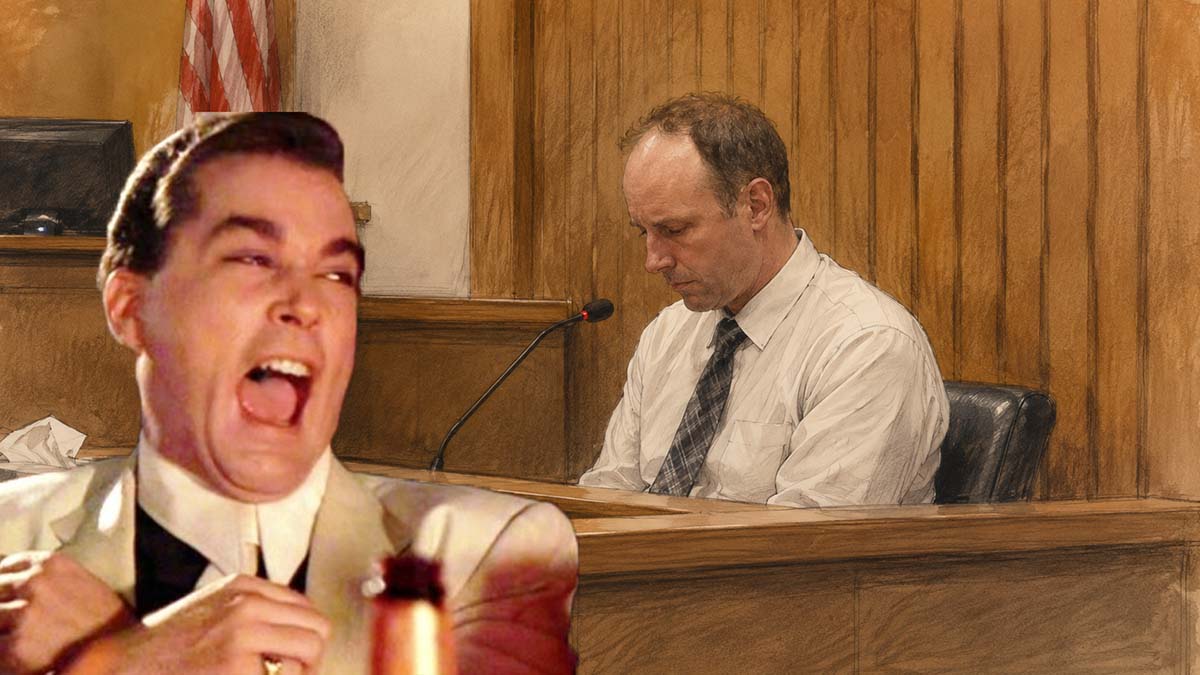
But on Tuesday, August 18, a Multnomah County jury wasn’t persuaded. Jurors sided 10-2 with Grant and awarded Voyles nothing, bringing an end to a civil trial that had drawn attention far beyond Portland and reopened a familiar debate about crime, accountability, self-defense, and just how far the legal system should go in protecting someone injured while committing a crime.
The verdict came after jurors spent days hearing two very different accounts of what happened inside the Portland countertop business before sunrise on March 6, 2023.
According to testimony, Voyles arrived at Touchstone Granite & Marble at about 5:30 that morning. He later said he was homeless, cold, hungry, and looking for somewhere to get warm. But getting inside the building required considerably more than simply finding an unlocked door.
Voyles pushed through an exterior gate, pried plywood away from a garage door, cut through metal bars, and squeezed through the opening. Once inside, he carried a flashlight through the darkened business and picked up a DeWalt bag containing a drill that he intended to take with him.

What Voyles apparently didn’t realize was that the building wasn’t empty.
Grant, the longtime owner of Touchstone Granite & Marble, was sleeping in a back portion of the property and had recently awakened. Grant testified that he stays at the business while he is in Portland, something that would later become an important detail in both the criminal case against Voyles and the civil lawsuit that followed.
The two men unexpectedly came face-to-face inside the showroom.
Surveillance footage captured Voyles’ immediate reaction. Clearly startled to discover someone inside, he repeatedly exclaimed in alarm before beginning to apologize and move back toward the area where he had entered.
Grant responded by apparently throwing a cup of urine into Voyles’ face. Grant then began throwing heavy pieces of tile in Voyles’ direction as Voyles retreated toward the garage.
It was already shaping up to be one of the stranger burglary encounters imaginable, but the confrontation was about to become far more serious.
The surveillance cameras captured the initial encounter, but not everything that happened after the two men moved into the garage area. That left jurors to decide between competing versions of the crucial moments leading up to the shooting.
Voyles testified that he wanted to get out of the building. He said he was afraid to crawl back through the same opening he had used to enter because Grant might grab his legs while he was trying to squeeze through. Instead, Voyles picked up a large pair of bolt cutters and attempted to use them to open a locked garage door.
According to Voyles, Grant briefly left the garage and returned carrying a gun. Voyles claimed Grant then shot him without warning.
Voyles testified that he believed he might die inside the building and eventually managed to dive through the opening in the garage door despite being wounded. Once outside, he made his way toward the road and attempted to get help. Construction workers eventually found him on the ground, and police responded.
Grant gave jurors a very different account of those final moments.
Grant said he went to retrieve his handgun because he wanted Voyles detained until police could arrive. He testified that his business had been burglarized numerous times over the years and that previous reports had often resulted in police simply taking information over the phone.
This time, there was an intruder standing inside the building where Grant had been sleeping.
Grant, who was 70 at the time, testified that when he returned to the garage, the 43-year-old Voyles was holding the large bolt cutters above his head. Grant said Voyles appeared agitated and began moving toward him.
Grant told the jury that he repeatedly ordered Voyles to get onto the ground. When Voyles didn’t comply and Grant believed he was about to be attacked, he fired three rounds.
Grant testified that he was reacting out of fear for his own safety, not attempting to execute or punish the man who had broken into the building.
The gunfire left Voyles badly injured. He was struck in the arm and torso, suffering extensive damage that required significant medical treatment. His arm was severely injured, and one of the bullets also caused serious trauma to his chest.
Yet when law enforcement examined what happened that morning, Grant wasn’t the one who ended up facing criminal charges.
Police and prosecutors declined to charge Grant over the shooting. Voyles, meanwhile, was prosecuted for his actions inside the building.
Voyles eventually pleaded no contest and was convicted of first-degree burglary and menacing, the latter charge involving the threat posed to Grant during the confrontation. Notably, the burglary conviction treated the property as a dwelling because Grant was sleeping there.
Voyles received five years in drug treatment court as part of his plea agreement. He also later served more than a year in prison in connection with an unrelated series of vehicle thefts. An expert called during the civil trial testified that Voyles had methamphetamine in his system at the time of the break-in and said the drug could have affected his ability to accurately remember the confrontation.
The criminal case, however, didn’t end the dispute.
Voyles later turned to civil court, accusing Grant and Touchstone Granite & Marble of assault, battery, negligence, and intentional infliction of emotional distress. He sought $5 million in compensatory damages and another $5 million in punitive damages.
The lawsuit placed an unusual question before a Multnomah County jury. Voyles had already been convicted for his conduct during the break-in, but his attorneys argued that committing a crime didn’t automatically give Grant unlimited authority to use force against him.
Voyles’ attorney, David Wallace, focused much of his case on the sequence of events before the gunfire. If Grant was truly afraid for his life, Wallace argued, why did he leave the garage, retrieve a firearm, and return rather than staying behind a locked door?
The defense saw the situation much differently.
Grant’s attorney, Stephanie Schilling, argued that her client was confronted before dawn by an unknown man who had forcibly entered the building and was later standing in front of him with a large pair of bolt cutters. Grant didn’t have to wait to be struck before defending himself, the defense maintained.
Grant also testified that he wasn’t wearing his hearing aids during the initial encounter and didn’t hear Voyles repeatedly apologizing as clearly as the surveillance video later revealed.
The unusual question of whether Grant was actually living inside the business also hovered over the trial. Portland officials had previously taken issue with Grant residing at the property because of industrial zoning restrictions, but the criminal case against Voyles had nevertheless treated the building as a dwelling because Grant lodged there.
Those details helped make the lawsuit far more complicated than the simple premise that quickly spread across social media: a man broke into a Portland business, got shot by the owner, and then sued the owner for $10 million.
Still, the basic facts were difficult to ignore.
Voyles admitted breaking into the building. He admitted taking possession of a tool bag that he intended to steal. He had been criminally convicted of burglary and menacing after the confrontation. Grant, meanwhile, had never been criminally charged for firing the shots.
After hearing the testimony and arguments from both sides, the civil jury reached essentially the same conclusion authorities had reached years earlier.
Jurors declined to hold Grant financially responsible for shooting Voyles.
According to reporting on the verdict, the jury voted 10-2 in Grant’s favor and also determined that Voyles’ decision to break into the building was a substantial factor in causing the injuries he later blamed on Grant.
The $10 million request became a $0 verdict.
For Grant, the decision closes another chapter in a confrontation that began in a dark Portland business more than three years ago. For Voyles, the case ends without the massive financial judgment he sought despite the severe injuries he suffered.
And for Portland, it’s another story that almost sounds fictional until you start reading the court testimony: a business owner awakened by a burglar before dawn, a cup of urine thrown during the confrontation, pieces of granite and tile flying through the building, bolt cutters raised in a dark garage, three gunshots, criminal convictions, and eventually a lawsuit demanding eight figures.
In the end, though, the jury’s answer was remarkably simple.
Kenneth Voyles asked James Grant for $10 million.
Twelve Multnomah County jurors heard the evidence.
Sources: The Oregonian/OregonLive on the original civil trial, The Oregonian/OregonLive’s follow-up coverage of the jury verdict, and KPTV’s reporting on the $10 million lawsuit