
For millions of people, Daveigh Chase will always be remembered in two completely different ways.
To Disney fans, she was the voice of Lilo, the stubborn, funny, lonely little girl in Lilo & Stitch who gave the world one of the most beloved animated characters of the early 2000s. To horror fans, she was Samara Morgan from The Ring, the pale, long-haired child who crawled out of a television and scared an entire generation senseless.
But before the movie posters, red carpets, MTV awards, and cult-favorite roles, Chase was an Oregon kid.
Born in Las Vegas and raised in Albany, Oregon, Chase began singing and dancing at just 3 years old. By the time she was still only a child, she had already broken into Hollywood in a way few performers ever do. She auditioned for Disney’s Lilo & Stitch at age 8, landed the lead voice role, and helped turn Lilo into one of Disney’s most recognizable characters.
Then came The Ring.
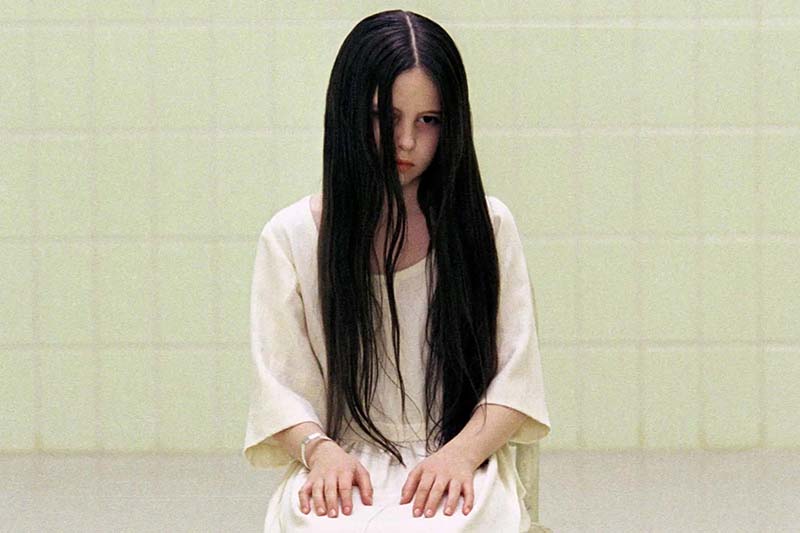
Released in 2002, the film became a horror phenomenon, and Chase’s performance as Samara was unforgettable. She barely needed dialogue. The image did the work: the black hair, the slow movement, the blank stare, the dreadful silence. She became one of the creepiest child villains in modern horror and won the MTV Movie Award for Best Villain for the role.
Now Chase is gone at just 35 years old, and the details surrounding her final years have left fans stunned, saddened, and asking how someone so many people remembered as a bright young star ended up so far from the world that once celebrated her.
According to her father, John David Schwallier, Chase died from complications of bacterial meningitis and a blood infection. He told The New York Times that his daughter had been homeless in Los Angeles with her boyfriend near the hospital where she died. TMZ first reported her death, and the Associated Press later confirmed the major details through her father’s comments.
A GoFundMe created while Chase was still hospitalized painted an increasingly heartbreaking picture of her final days. Hernandez, identified as her boyfriend, wrote that her condition had taken a severe turn and that doctors had warned she may not have much time left.
In the fundraiser, he said what Chase wanted most was simple: a safe place where the two of them could live together, find peace, and feel at home. As her health declined, Hernandez wrote that he hoped to give her that comfort in whatever time she had remaining.
It is a devastating end for a woman whose childhood work became part of American pop culture.
Chase’s voice as Lilo still lives in countless homes. She gave the character a rawness that felt real: funny, emotional, wounded, and full of heart. Lilo was not some polished cartoon kid. She was weird, messy, grieving, and deeply lovable. That is a huge part of why the movie still matters to people more than two decades later.
At almost the same time, Chase became horror royalty. As Samara in The Ring, she helped create one of the most disturbing movie images of the 2000s. For anyone who watched that film too young, the fear stuck. Chase’s performance was quiet, eerie, and almost impossibly effective.
She also voiced Chihiro in the English-language version of Spirited Away, appeared in Donnie Darko, and had roles in projects including Oliver Beene and Big Love. For a while, it looked like she might have the kind of long Hollywood career that begins in childhood and grows into adulthood.
But that is not what happened.
In the years after her childhood fame, Chase’s life appears to have taken a much darker turn. Her father said she had struggled with drugs since she was 13. Her former manager and friend, John Ryan Jr., told Entertainment Weekly that Chase had been missing from much of her old circle for years. According to Ryan, she disappeared around 2015 after missing a meeting tied to a possible role with Rob Reiner.
Ryan described her as private and introverted, someone who did not seem especially hungry for the Hollywood machine even when she was working. He said she had a pattern of disappearing for short periods, which made it difficult at first for those around her to know when something was truly wrong. But over time, the concern became more serious.
One of the most painful details to emerge after her death involved a video reportedly showing Chase on Skid Row in Los Angeles months before she died. To people who remembered her from Disney premieres, horror movie posters, and early-2000s red carpets, she appeared almost unrecognizable. Frail, far from the spotlight, and seemingly lost in a part of Los Angeles that has become a symbol of addiction, homelessness, mental illness, and human suffering.
It was a shocking contrast. Not because famous people suffer more than anyone else, but because the world had kept a frozen image of Daveigh Chase in its mind: the little girl who voiced Lilo, the terrifying child from The Ring, the young actress standing onstage with famous adults. The final public glimpses painted a much more heartbreaking picture.
Ryan told Entertainment Weekly he had been developing a documentary called Finding Lilo. Originally, the project was intended to help locate Chase and bring attention to what had happened to her. After her death, he said the documentary would become more of a celebration of her life.
And then there is the old MTV clip.
For people who followed the P. Diddy scandal online, the footage was not brand new after Chase died. It had already resurfaced during the broader scandal around Sean “Diddy” Combs, when old clips, interviews, and photos involving him and other celebrities were being reexamined. The video drew attention in 2024, during a period when Combs was facing federal charges and civil allegations, including allegations involving minors. It gained renewed attention again after Chase’s death because she was the young actress in the clip.
The moment happened at the 2003 MTV Movie Awards, when Chase won Best Villain for The Ring. She was a child. Combs was an adult. Ashton Kutcher was also there. In the clip, Chase is positioned between the two men while Combs asks whether she is coming to the after-party. Kutcher appears to laugh and encourage her as the moment unfolds.
Seen in isolation, some might dismiss it as awkward old awards-show banter. Seen through today’s lens, especially after the disturbing allegations surrounding Combs and the wider conversation about how Hollywood treated underage performers, the clip feels much harder to brush off.
That does not mean the clip proves something specific happened to Chase. There is no public evidence connecting Chase herself to Combs’ criminal case or the civil lawsuits against him. That distinction matters. But it is also fair to say the footage caught attention for a reason. A child actress being asked about an after-party by powerful adult men in the entertainment industry lands very differently now than it may have on television in 2003.
The Diddy scandal has forced a lot of people to look back at celebrity culture with colder eyes. The parties, the backstage access, the way adults joked around underage stars, the way young performers were pushed into grown-up spaces and expected to smile through it. Chase’s clip became part of that larger conversation, not because it answers everything about her life, but because it captures a deeply uncomfortable piece of the era she grew up in.
Her story is painful because it has so many layers.
There is the Oregon connection: a girl raised in Albany who somehow made it from a Willamette Valley childhood to Disney, DreamWorks, MTV, horror history, and one of the most beloved animated films ever made.
There is the child-star tragedy: the young performer who became famous before she could possibly understand what fame would take from her.
There is the Hollywood question: how many kids were placed in adult rooms, adult parties, adult conversations, and adult pressures while the cameras kept rolling?
And there is the human reality: Daveigh Chase was not just Lilo, not just Samara, not just a strange old MTV clip, and not just the heartbreaking Skid Row footage that shocked people near the end.
She was a daughter. A friend. An artist. A person who clearly struggled. A person whose life had joy, talent, pain, distance, and damage in it.
It is easy for the internet to reduce someone to one image. In Chase’s case, there are several competing images. The sweet child voice of Lilo. The nightmare face of Samara. The young girl at MTV, standing between Diddy and Ashton Kutcher. The unrecognizable woman reportedly seen on Skid Row. The 35-year-old whose life ended after meningitis and a blood infection.
None of those images alone tells the whole story.
For fans, her death hits hard because her work never really left. Lilo & Stitch still makes people cry. The Ring still scares people. Spirited Away still finds new viewers. Her voice and presence are stitched into the childhoods of people who are now adults themselves.
For Oregon, there is an added sadness in knowing that one of the most unforgettable young performers of that era came from Albany, then ended her life far from home, far from the spotlight, and far from the version of herself the world remembered.
Daveigh Chase deserved more than a tragic final chapter. She deserved peace. She deserved stability. She deserved to be seen as a whole person, not just a child star who vanished, a horror icon, or another name attached to Hollywood’s long list of broken young performers.
But her work remains.
Lilo remains.
Samara remains.
And somewhere beneath all the headlines, rumors, viral clips, and grim final details, there was once a little girl from Albany with a voice and presence powerful enough to reach the entire world.