
A camping trip in Oregon’s Mount Jefferson Wilderness turned into a massive search-and-rescue operation this week after a 68-year-old hiker left his campsite near Russell Lake and did not return.
For days, John Nelson’s location remained unknown as search crews moved through steep, remote country in the central Cascades. The search eventually expanded to include more than 100 volunteers, emergency personnel and partner agencies, all working through a landscape complicated by dense forest, rugged drainages and lingering damage from the catastrophic wildfires of 2020.
Late Thursday evening, the news everyone had been hoping for finally came.
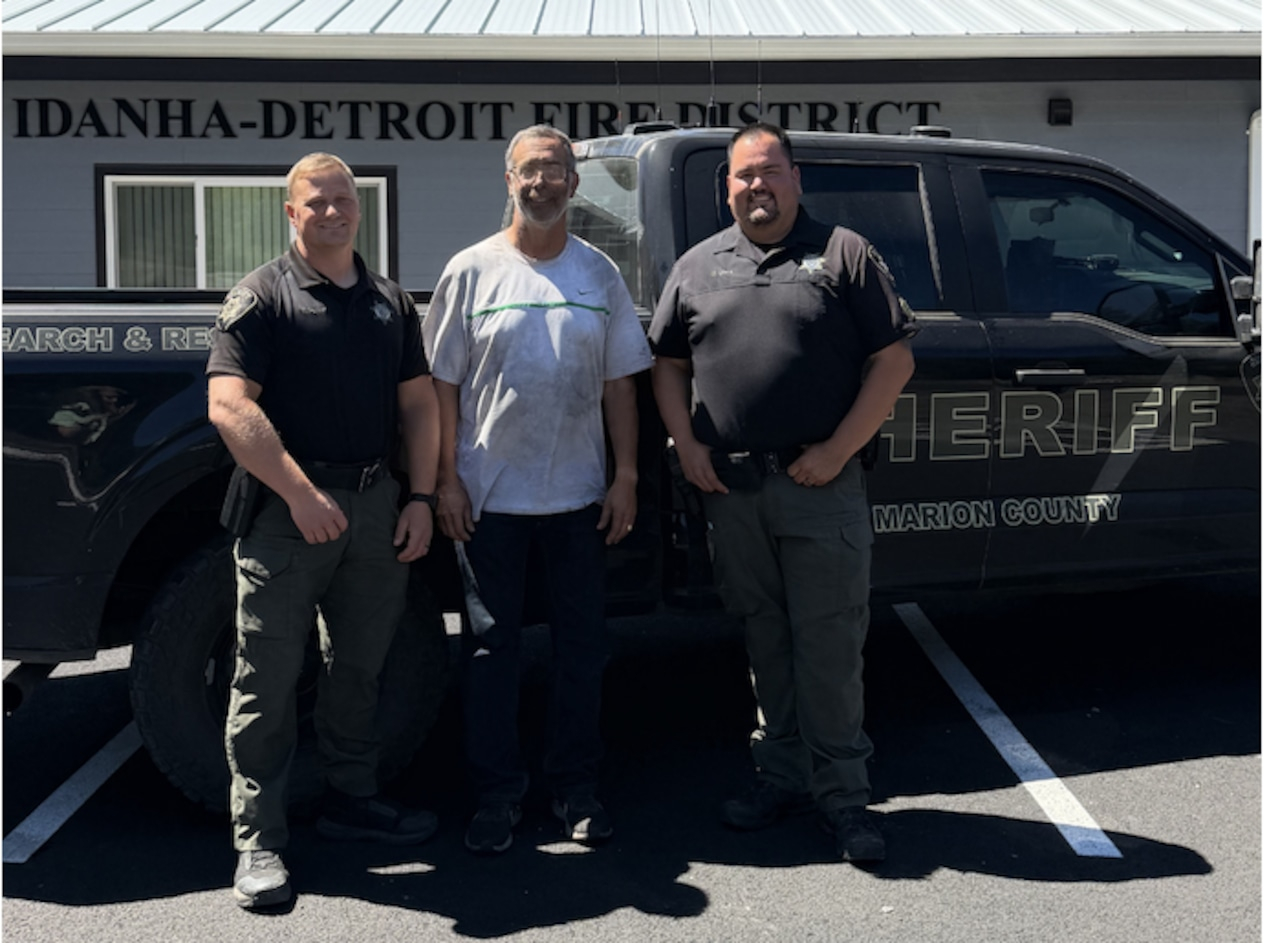
Members of Benton County Search and Rescue found Nelson alive in a deep drainage near the South Breitenbush Trail, approximately five trail miles from the campsite where his trip had begun. He was unable to make the difficult hike back under his own power, so rescuers stayed with him in the wilderness overnight.
On Friday morning, an Oregon Army National Guard Black Hawk helicopter flew into the area and evacuated him from the mountains.
Nelson was evaluated by medical personnel and reunited with his family, bringing an unexpectedly hopeful ending to a search that had grown more urgent with every passing hour.
A Camping Trip Near Russell Lake
Nelson entered the Mount Jefferson Wilderness with a friend on Monday, July 6, for what authorities described as an overnight camping trip near Russell Lake.
Russell Lake sits in a remote and striking section of the Oregon Cascades, surrounded by high-elevation forest, mountain trails and the volcanic landscape around Mount Jefferson. The area is familiar to backpackers traveling through the wilderness and along nearby portions of the Pacific Crest Trail, but reaching it requires more than a casual walk from a roadside parking area.
This is the kind of Oregon country where familiar comforts disappear quickly. Cell service is unreliable or entirely unavailable. Weather can shift unexpectedly, particularly at higher elevations, and trails that appear straightforward on a map may cross steep slopes, loose ground, streams or sections of fallen timber.
According to the Marion County Sheriff’s Office, Nelson left the campsite alone at approximately 7:15 a.m. Tuesday, July 7. Authorities have not publicly explained where he intended to go, why he left camp or how long he expected to be away.
When Nelson did not return, a family friend reported him overdue shortly after noon that day. The sheriff’s office then began organizing a search in the Mount Jefferson Wilderness near Russell Lake.
Nelson was described as an experienced hiker, 6 feet, 1 inch tall and weighing about 200 pounds. He was believed to be wearing jeans and a light blue jacket and carrying a light blue day pack when he left the campsite.
Authorities asked anyone who had recently traveled through the Russell Lake area to think back and report any possible sighting. Members of the public were also urged to stay away from the active search area so trained crews could work without additional people entering the wilderness and potentially complicating the operation.
As Tuesday passed without an answer, the urgency of the search began to grow.
The official That Oregon Life store
The Oregon you bring home.
Start the day with Oregon-roasted coffee, then find original gear inspired by the places, stories, and oddities that make this state ours.
Shop Oregon gear


A Search Spreads Across the Mount Jefferson Wilderness
Finding one missing person in the Oregon backcountry is rarely as simple as following a single trail.
A search may begin at the last place the person was seen, but planners must then consider a wide range of possibilities. The missing person may have followed a trail, taken a side route, descended toward water or moved away from the expected path after becoming confused. An injury, exhaustion or an attempt to find shelter can also change how far someone travels and in what direction.
Even an experienced hiker may cover considerable ground before recognizing that the way back is no longer clear.
Searchers also have to account for the difference between distance on a map and distance on the ground. Five miles through a city neighborhood is one thing. Five miles through steep Cascade terrain, downed timber and overgrown trail corridors can require hours of slow and physically demanding travel.
More than 100 people eventually took part in the effort to find Nelson, including search-and-rescue volunteers from multiple counties, law enforcement personnel, Forest Service crews and other supporting agencies.
Oregon’s county search-and-rescue system relies heavily on trained volunteers who respond when hikers, hunters, campers, children, mushroom pickers and other outdoor visitors go missing. Many of those volunteers leave work and family responsibilities behind to enter difficult terrain, often carrying enough equipment to remain outside well beyond the length of a normal hiking trip.
They may search through darkness, bad weather, thick brush and unstable landscapes while following carefully assigned routes. Some teams specialize in tracking, wilderness medicine, technical rope rescue, communications or working with search dogs. Others provide transportation, logistics, mapping or support at a central command post.
In Nelson’s case, rescuers faced an additional problem. The search area extended into a forest that had been heavily damaged by wildfire and remained closed to the general public.
The South Breitenbush Trail Has Been Closed Since the 2020 Wildfires
Nelson was eventually located near the South Breitenbush Trail, a route within an area that has remained closed since the devastating Oregon wildfire season of 2020.
The Beachie Creek and Lionshead fires burned extensively through the region around Detroit, the North Santiam Canyon and the Mount Jefferson Wilderness. The fires destroyed homes, damaged campgrounds and roads, and transformed large sections of forest that had long been used for hiking, backpacking and other outdoor recreation.
Although six years have passed, portions of the fire area remain dangerous.
The Willamette National Forest still lists an active closure associated with the Beachie Creek and Lionshead fires. The closure includes affected roads, trails, trailheads and surrounding forest lands where wildfire damage continues to create hazards for visitors.
A forest does not become safe as soon as the flames are extinguished. Fire-killed trees may remain standing for years before falling without warning. Damaged root systems can weaken the soil, while winter storms and heavy rain move rock, dirt and burned debris into gullies and across old trails.
On the ground, a route that once offered relatively simple travel can disappear beneath layers of fallen trees. In some places, hikers may have to climb over trunks, crawl underneath them or leave the original trail to find a way around. Each detour makes it easier to lose sight of the actual route.
New vegetation also returns quickly in the Cascades. Brush, young trees and fireweed can fill open spaces and cover stretches of trail that are no longer regularly maintained. A path may still appear as a clean line on a GPS device even though little remains of it in the physical landscape.
For search crews, those conditions can make every part of an operation more difficult. Rescuers must not only locate the missing person, but also find a safe way to reach that person while carrying medical supplies, communications equipment and other gear.
Forest Service personnel reportedly helped clear portions of the route so search teams could move safely through the damaged area during the operation.
The difficult conditions also help explain why reaching Nelson after he was found could not be handled with a quick walk back to the trailhead.
Searchers Find Nelson Alive in a Deep Drainage
At approximately 8:42 p.m. on Thursday, July 9, members of Benton County Search and Rescue found Nelson alive in a deep drainage near the South Breitenbush Trail.
The team was operating under the direction of the Marion County Sheriff’s Office Search and Rescue command when they located him. He was approximately five trail miles from Russell Lake, where he had originally been camping.
Authorities have not released a complete account of Nelson’s movements between Tuesday morning and Thursday evening. It remains unclear how he reached the drainage, whether he believed he was following a particular route or what circumstances prevented him from returning to camp.
That unanswered portion of the story is important. Without Nelson’s own account or additional information from investigators, it would be wrong to speculate about precisely how he became lost.
What is clear is that a deep drainage in the Mount Jefferson Wilderness would be an exceptionally difficult place from which to escape, particularly after multiple days outdoors.
Drainages follow the lowest portions of the landscape and often contain streams, loose rock, slick surfaces and thick vegetation. The slopes on either side may be steep, while fallen trees and storm debris can collect at the bottom. Traveling downhill may initially appear easier than climbing, but a drainage can gradually lead a person into increasingly confined terrain.
These areas can also be challenging to search from the air. Tree cover and steep slopes may hide a person from passing aircraft, while ridges and flowing water can interfere with the sound of shouting or whistles.
Nelson had survived long enough for a ground team to reach him, but the rescue was not over.
He was not physically capable of hiking out through the rugged terrain. With darkness settling over the Cascades, rescuers made the decision to remain with him overnight and arrange for an aerial evacuation the following morning.
Rescuers Remain in the Wilderness Overnight
Members of Marion County Search and Rescue joined the Benton County team and stayed with Nelson through Thursday night.
Authorities have not released detailed information about his medical condition. Reports only state that he was unable to walk out safely and needed to be removed by helicopter.
That decision reflects one of the realities of wilderness rescue. Finding a missing hiker is sometimes only the beginning of the most technically difficult portion of the mission.
A rescue team must consider the person’s condition, the distance to the trailhead, the steepness of the terrain and the dangers facing both the patient and rescuers. Attempting to move someone through unstable forest in darkness may create additional injuries or place the entire group at risk.
A ground evacuation can also require many more people than the public might expect. Carrying an adult in a rescue litter over logs, through brush and up steep slopes is slow, exhausting work. Teams have to rotate frequently, and a journey of several miles may continue for much of a day.
In Nelson’s case, rescuers had reached a remote drainage inside a closed, fire-damaged area. Staying in place until daylight allowed crews to care for him while aviation personnel prepared a safer way out.
Search-and-rescue volunteers enter the backcountry knowing they may need to remain there far longer than originally planned. Their packs often include extra layers, shelter, food, medical supplies, batteries and communication equipment for exactly that reason.
During the night, the rescuers who had worked for days to find Nelson became his temporary companions in the wilderness. They kept him safe and prepared for the helicopter that would arrive the following morning.
Oregon National Guard Black Hawk Called for the Rescue
At approximately 11 a.m. Friday, July 10, an Oregon Army National Guard Black Hawk helicopter evacuated Nelson from the Mount Jefferson Wilderness.
Black Hawk helicopters are designed to operate in demanding environments, but mountain rescue flights still require careful planning. Pilots must consider elevation, wind, visibility, tree cover, steep terrain and whether there is a safe place to land or conduct another type of extraction.
The central Oregon Cascades are filled with narrow valleys and forested slopes where clear landing areas can be difficult to find. Dead trees and other wildfire damage add further hazards near the ground.
The National Guard crew successfully removed Nelson from the wilderness and transported him to a nearby landing zone. Medical personnel evaluated him before he was reunited with his family and allowed to return home.
After days of searching, the operation ended with the result every rescue team wants.
Nelson was alive. He had reached medical care. His family no longer had to wonder whether he would be coming home.
Marion County Sheriff Nick Hunter praised the search-and-rescue volunteers and partner agencies involved in the effort, pointing to their persistence in exceptionally challenging terrain.
The operation required the work of people on foot, crews managing the search from command, Forest Service personnel addressing damaged access routes and National Guard aviators completing the final evacuation. No single team could have brought the search to a successful conclusion alone.
How an Experienced Hiker Can Still Get Into Trouble
Nelson was described throughout the search as an experienced hiker, and some readers may wonder how someone familiar with the outdoors could become lost or stranded.
Experience certainly matters in the wilderness. It can help a person recognize weather changes, manage equipment, choose shelter and avoid panic. Years spent outdoors may also provide practical knowledge about navigation, water, terrain and personal limits.
Experience does not make anyone immune to injury, confusion, equipment failure or an unexpected change in conditions.
Oregon’s mountain landscapes can be deceptive. A trail may be easy to follow in one direction and almost invisible on the return trip. A route that appears obvious in clear daylight may look completely different after clouds move in or evening shadows settle over the forest.
Wildfire damage makes navigation even more complicated. Familiar trail markers may be gone, and fallen trees can force hikers into repeated detours. Once a person has walked around several large obstacles, the original path may no longer be visible behind them.
A hiker might follow what appears to be the trail only to discover that it is a game path or an old route no longer in use. Traveling toward water can also seem like a logical choice, but creeks and drainages do not necessarily lead toward roads or developed areas. In the mountains, they may descend into steeper and more dangerous country.
Physical trouble can arise just as quickly. A twisted ankle, fall, illness or exhaustion may turn a normal return trip into an emergency. Even without a major injury, dehydration and lack of food can affect decision-making and make steep climbs increasingly difficult.
The details released in Nelson’s case do not establish which, if any, of those factors played a role. His survival may have been aided by the same experience that was not enough to prevent the situation from developing.
The larger lesson is not that experienced hikers should avoid the wilderness. It is that preparation remains important regardless of how many years someone has spent outdoors.
Leaving a Detailed Trip Plan Can Save Critical Time
One of the most useful safety steps hikers can take happens before they ever reach the trailhead.
A trip plan should be left with a reliable friend or family member who will notice if the person does not return. The plan should include the exact trailhead, intended route, planned camping locations, expected return time and a description of the vehicle left at the trailhead.
Saying that someone is “camping near Mount Jefferson” leaves an enormous search area. Identifying Russell Lake, the planned access route and the expected time of return gives rescuers a much stronger place to begin.
The person receiving the plan should also understand when to call authorities. An overdue hiker should not automatically trigger panic, but waiting too long can cost search teams valuable daylight.
In Nelson’s case, a family friend reported him overdue shortly after noon Tuesday. Searchers then had a known campsite near Russell Lake and a general time when he had left.
Hikers should also avoid changing their plans without informing anyone when communication is available. A last-minute decision to use a different trail or camp at another lake can make the original itinerary less helpful.
Leaving a note inside a vehicle can provide additional information, although valuables and sensitive personal information should not be left visible. Some hikers place their plans in the glove compartment or another location rescuers are likely to check after identifying the vehicle.
No safety measure guarantees a successful rescue, but accurate information can prevent crews from spending precious hours searching the wrong drainage, trail system or side of a mountain.
Why Staying With a Hiking Partner Matters
Authorities used Nelson’s rescue to remind outdoor visitors about the importance of remaining with their hiking partners.
People separate for many ordinary reasons. One person may want to explore a side trail, retrieve water, take photographs or return to camp while the other continues ahead. The planned separation may last only a few minutes.
The problem begins when one person does not return.
The partner waiting at camp may not know the missing person’s intended destination, exact direction or whether the person changed plans along the way. Searchers then have to consider every possible route leading away from the last known point.
Remaining together also provides immediate help when something goes wrong. A partner can assist after a fall, share equipment, verify a location or use an emergency device while the injured person remains sheltered.
Solo hiking is not automatically unsafe, and many people enjoy traveling alone in Oregon’s forests. It simply requires a greater level of planning and self-reliance. Someone hiking alone should make sure another person knows exactly where they are going and when they are expected back.
Whether traveling alone or with a group, everyone should discuss what will happen if the group becomes separated. A simple plan to stop and return to the last known location can prevent a minor mistake from becoming a much larger emergency.
A Cellphone Is Useful, but It Is Not a Complete Rescue Plan
Modern smartphones have changed how people navigate outdoors. Offline mapping applications can display trails, elevation and a person’s approximate position without a normal cellular connection.
That technology is valuable, but it has limitations.
Many parts of the Mount Jefferson Wilderness have little or no cellphone service. A phone may work at the trailhead and lose its connection only a short distance into the forest. Navigation, photography and cold nighttime temperatures can also drain the battery more quickly than expected.
A fall may damage the phone, and water can make it unusable. Even a perfectly functioning device may not be able to contact emergency dispatch from a remote drainage.
Satellite communicators and personal locator beacons provide another layer of protection. Depending on the device, a user may be able to send an emergency signal, provide coordinates or exchange short messages with responders when cell service is unavailable.
Those devices still need to be charged, registered and carried where they can be reached. A beacon buried at the bottom of a pack is less useful after an injury that prevents the hiker from moving.
Paper maps and a compass also remain worthwhile backups, particularly for anyone traveling beyond popular, well-maintained trails. Technology can fail. Knowing how the landscape fits together may help a hiker avoid descending into the wrong drainage or walking farther from help.
Checking Current Closures Before Entering the Forest
The location where Nelson was found also provides an important reminder about checking current conditions before any backcountry trip.
The South Breitenbush Trail remains within a closure area associated with the Beachie Creek and Lionshead fires. The trail’s presence on older maps or hiking websites does not mean it is currently open or safe for public travel.
Authorities have not said that Nelson knowingly entered the closed trail from its normal access point. Because he was missing, he could have reached the area unintentionally after leaving Russell Lake. There is no fair basis for accusing him of deliberately ignoring the closure.
Still, other visitors should understand why such restrictions can remain in place for years.
A closed burn area may contain unstable trees, damaged bridges, landslides and trail sections that have completely disappeared. Emergency access may be limited, and rescuers may have to enter the same dangerous conditions when someone becomes stranded.
Before leaving home, visitors should check official Forest Service alerts, local ranger district information and current fire restrictions. Guidebooks, social media posts and trail reports from previous years may no longer be accurate.
The rule applies even to people who have hiked the same route many times. Oregon forests are constantly changing, particularly after fires, winter storms and floods.
The Quiet Work Behind a Successful Rescue
A successful wilderness rescue often becomes a short news story: a person was reported missing, searchers found them and a helicopter brought them home.
What those few lines cannot capture is the amount of work behind the outcome.
More than 100 people contributed to the search for Nelson. Some walked through the forest looking for tracks or other signs. Others reviewed maps, coordinated teams, monitored radio traffic, maintained records, transported equipment or prepared medical support.
Search leaders had to decide where Nelson was most likely to have traveled and how to divide a large wilderness into searchable sections. Teams entering the field needed assignments that were clear enough to prevent duplicated work or gaps in coverage.
Forest Service crews dealt with access through a damaged and closed landscape. National Guard aviators prepared to fly into mountain terrain and complete the evacuation. Rescuers who located Nelson remained beside him overnight rather than attempting a dangerous movement through the darkness.
Many of the people involved were volunteers.
They did not know whether the search would last a few hours or several days. They also did not know what they would find at the end of it.
Search-and-rescue personnel respond despite that uncertainty because each assignment carries the possibility that someone is still waiting to be found.
This time, John Nelson was.
An Oregon Wilderness Story With a Hopeful Ending
The Mount Jefferson Wilderness is one of the places that defines Oregon’s wild character. Its lakes, volcanic peaks and deep forests offer the kind of quiet that draws people away from highways and crowded cities.
That beauty comes with real distance and real risk.
A person can walk into the Cascades on a clear summer morning and, within hours, become separated from every easy route back to safety. A wrong turn, injury or missing section of trail can matter more in the wilderness than it ever would closer to home.
Nelson’s disappearance brought together rescuers from across the region and sent them into an area still bearing the scars of Oregon’s devastating 2020 fires. They searched until a Benton County team reached a deep drainage near the South Breitenbush Trail on Thursday evening.
There, approximately five miles from Russell Lake, they found the missing 68-year-old alive.
The rescuers stayed with him through the night. The next morning, a Black Hawk helicopter carried him out of the mountains, where medics and his family were waiting.
For several days, Nelson’s loved ones did not know whether he would come home.
Because of the skill, persistence and cooperation of more than 100 people, he did.