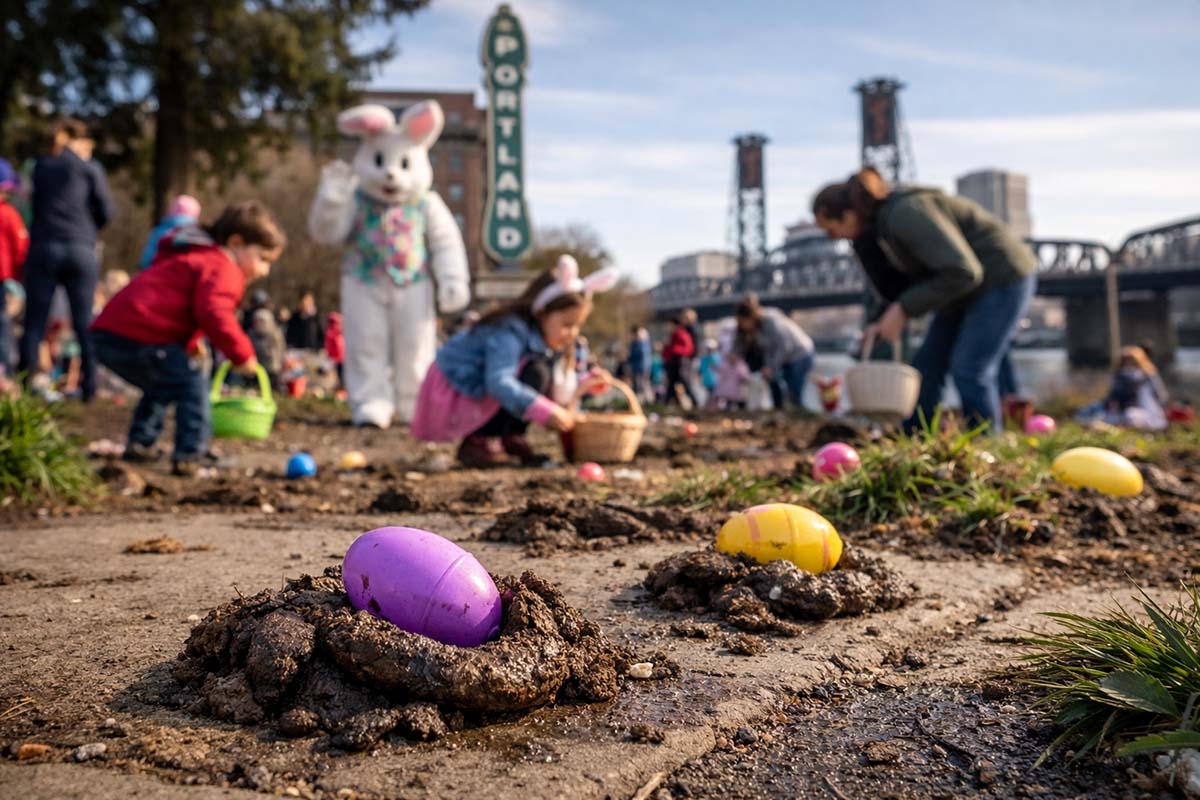
PORTLAND, OR — In an effort to keep traditions alive while also staying true to the city’s unique character, Portland officials announced this week that this year’s Easter egg hunt will include eggs hidden directly in sidewalk poop.
“Families have come to expect a certain… authenticity from Portland,” said one city spokesperson while carefully choosing their words. “We didn’t want to sanitize the experience too much.”
The event, set to take place across several popular downtown areas, promises children a “thrilling, immersive hunt” where colorful plastic eggs may be found tucked into bushes, behind benches, and—officials confirmed—strategically placed within existing sidewalk hazards.
“Part of the fun is not knowing what you’re reaching into,” said Parks & Recreation coordinator Lindsey Hale. “It’s about building resilience.”
Parents expressed mixed reactions to the announcement.
“I mean, we were already watching where we step,” said one local mother. “Now we just have to watch where they reach too.”
Others praised the city for what they described as a more “organic” approach to the holiday.
“It’s refreshing,” said one Portland resident adjusting their reusable tote bag. “Other cities do fake grass and plastic setups. This feels… real.”
To ensure safety, officials stated that participants will be encouraged to bring gloves, hand sanitizer, and “a strong sense of adventure.” Volunteers will also be stationed throughout the hunt to offer guidance, though they admitted their primary role will be pointing and saying, “maybe not that one.”
City leaders defended the decision, emphasizing that the event reflects Portland’s values.
“We’re embracing what makes us unique,” one official said. “And frankly, the eggs really pop against the background.”
Critics, however, questioned whether the city may have missed an opportunity to address the underlying issue.
“If we’re already organizing teams to go out and interact with all this,” one resident asked, “why not just… clean it up?”
At publishing time, officials confirmed plans for a follow-up Earth Day event in which participants will be invited to help identify “which parts of the park are technically still park.”