
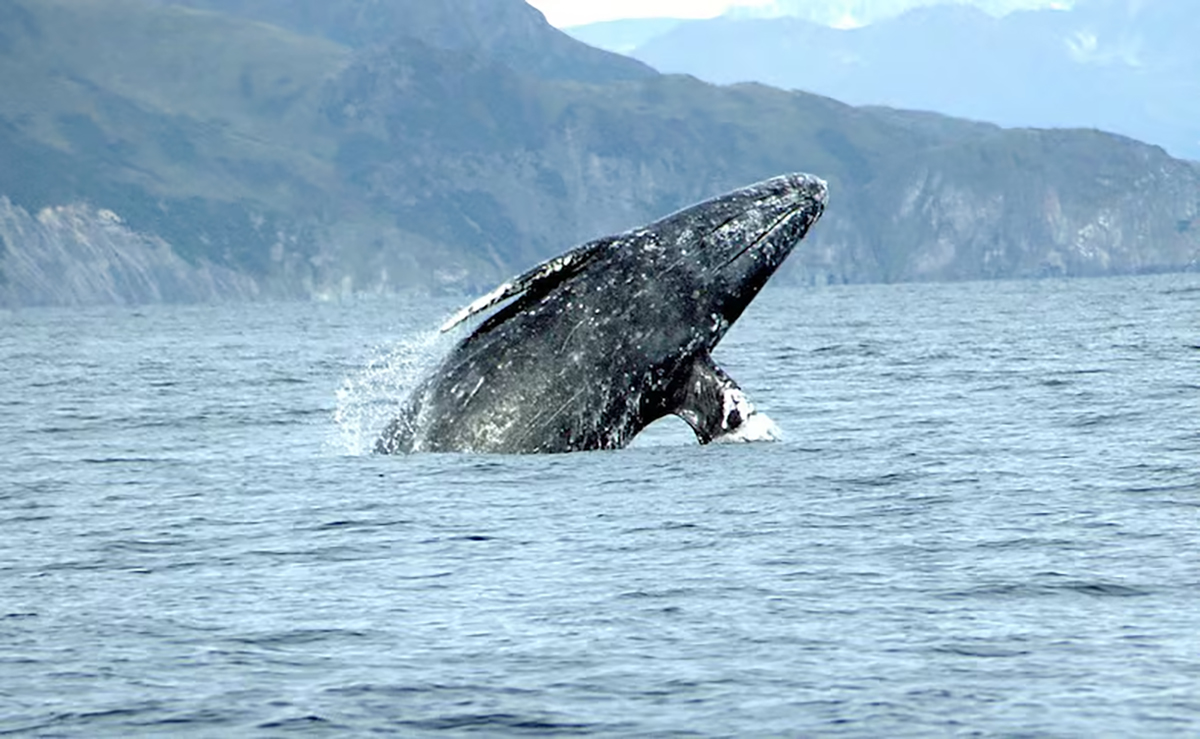
There’s something unforgettable about standing on the Oregon coast, scanning the horizon, and suddenly spotting that telltale puff of mist rising from the ocean. For a moment, everything slows down. The wind, the waves, the noise of the world. And then you realize you’re watching one of nature’s greatest migrations unfold right in front of you.
From March 21 through March 29, 2026, Whale Watch Week returns to the Oregon coast, offering one of the best chances of the year to see gray whales as they make their journey north toward Alaska.
People travel from all over the world for this. But here in Oregon, we get a front-row seat.
A Front-Row View Of The Gray Whale Migration
Each spring, thousands of gray whales begin their northern journey after wintering in the warm lagoons of Baja California. As they move along the Pacific coastline, many pass surprisingly close to shore, making Oregon one of the best places anywhere to see them without ever stepping on a boat.
This northbound migration begins in late March and stretches over several months, but this window marks one of the peak times to catch the action.

Do you love Oregon?
Sign up for monthly emails full of local travel inspiration and fun trip ideas. In each newsletter we'll share upcoming events, new things to do, hot dining spots and great travel ideas.
While winter migration sees higher hourly counts, spring offers something just as special. The whales often travel slower, sometimes with calves, and the experience feels a little more intimate and relaxed.
Even more incredible, about 200 gray whales break away from the migration entirely and spend the summer feeding right here along the Oregon coast.
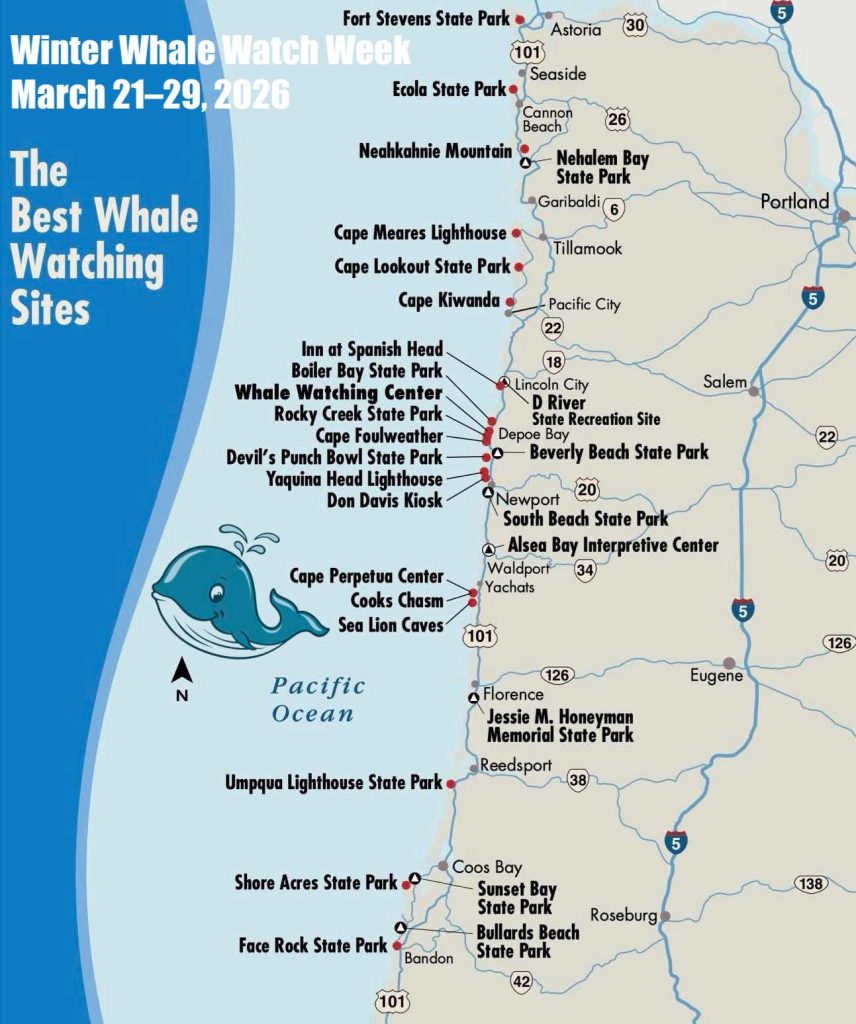
15 Incredible Places To Watch Along The Oregon Coast
During Whale Watch Week, trained volunteers and park rangers will be stationed at 15 prime viewing locations from 10 a.m. to 1 p.m. daily, helping visitors spot whales and answer questions.
These locations stretch the entire coastline, meaning no matter where you are, there’s a good chance you’re near a viewing point:
Fort Stevens State Park
Neahkahnie Mountain Overlook
Cape Meares Lighthouse
Boiler Bay State Scenic Viewpoint
The Whale Watching Center
Rocky Creek State Scenic Viewpoint
Yaquina Head Outstanding Natural Area
Yachats State Recreation Area
Cape Perpetua Turnout
Heceta Head Lighthouse
Umpqua Lighthouse
Shore Acres State Park
Face Rock State Scenic Viewpoint
Harris Beach State Park
Each spot offers its own unique vantage point, from dramatic cliffs to lighthouse overlooks, all perfectly positioned for scanning the Pacific.
A Program Rooted In Oregon History
This beloved tradition started back in 1978, when Don Giles of the Hatfield Marine Science Center had a simple but powerful idea.
Standing at Yaquina Head with binoculars, alongside researchers Bruce Mate and Denise Herzing, he helped confirm what many suspected. Gray whale migrations peak during two key times of year. One during winter as whales head south, and another in early spring as they return north.
That realization led to the creation of the Whale Watching Spoken Here® program, which has since grown into one of the most organized shore-based whale watching efforts in the United States.
By the early 1980s, the Oregon Parks and Recreation Department took over coordination, continuing the mission for more than 40 years. Today, the program now known as Oregon Whale Watch connects tens of thousands of visitors with these incredible animals every year.
Why Oregon Is One Of The Best Places In The World To See Whales
There are a few reasons this experience is so special here.
First, location. Thanks to Oregon’s famous 1967 Beach Bill, public access is protected along nearly the entire coastline. That means incredible viewpoints aren’t tucked behind private property. They’re open to everyone.
Second, the whales themselves. Scientists estimate there are now more than 13,000 gray whales in the eastern North Pacific. During peak winter migration, as many as 30 whales per hour can pass the Oregon coast. In spring, the pace slows to about six whales per hour, but the migration stretches out over months, giving visitors plenty of chances to catch a sighting.
And finally, the volunteers. More than 300 active volunteers help make Whale Watch Week possible, continuing a tradition that’s welcomed generations of visitors to the coast.
What Whale Watch Week Looked Like Last Year
To give you an idea of just how active this migration can be, here’s a snapshot from Winter Whale Watch Week 2025:
December 27: 33 whales spotted
December 28: 77 whales spotted
December 29: 123 whales spotted
December 30: 161 whales spotted
December 31: 112 whales spotted
These numbers shift every year, but one thing stays the same. When conditions are right, the Oregon coast becomes one of the best wildlife viewing experiences in the country.
Come See It For Yourself
There’s no ticket required. No reservation. No special gear beyond maybe a pair of binoculars and a little patience.
Just you, the ocean, and the chance to witness something truly incredible.
Whether you’re a longtime Oregonian or visiting for the first time, Whale Watch Week is one of those experiences that sticks with you. The kind you talk about long after you’ve left the coast.
So if you find yourself near the ocean between March 21 and 29, take a moment. Look out across the waves.
You might just see a gray whale on its journey north.