PORTLAND, OR — After years of observation, analysis, and quietly judgmental note-taking, researchers have formally admitted they still do not understand why Portland residents look the way they do.
The announcement came Tuesday from a multidisciplinary research team stationed primarily outside coffee shops, food co-ops, and sidewalks where no one appears to be headed anywhere specific.
“We thought time would help,” said lead researcher Dr. Elaine Morcroft, gesturing vaguely toward a person wearing cargo shorts, hiking boots, a scarf, and what appeared to be a sleeping bag repurposed as a jacket. “It hasn’t.”
According to the study, Portland residents consistently present themselves as if appearance is both deeply intentional and completely accidental at the same time. Subjects were observed wearing clothing combinations that suggested preparedness for rain, sun, cold, heat, protest, camping, and an art opening all at once.
“One individual was wearing wool socks, sandals, a denim jacket, and fingerless gloves in 64-degree weather,” Morcroft said. “When asked how they were feeling, they said ‘normal.’”
Early research attempted to link Portland appearance to economic factors. That theory collapsed almost immediately after researchers realized many participants were wearing expensive outdoor brands while still looking like they had slept on a bus.
“We saw a $300 jacket layered over a shirt that looked like it had lost several arguments with a washing machine,” said behavioral analyst Dr. Marcus Feld. “That’s not poverty. That’s philosophy.”
Another hypothesis suggested Portland residents dressed this way as a form of rebellion. That also failed.
“Rebellion usually pushes against something,” Feld explained. “This feels more like opting out entirely.”
Hair grooming patterns provided no additional clarity. Some subjects appeared to have spent hours cultivating a specific level of disarray, while others looked genuinely surprised to discover they still had hair.
“Several beards appeared to be in different developmental stages simultaneously,” the report notes. “This should not be biologically possible.”
Perhaps most unsettling to researchers was the confidence.
“These people are not embarrassed,” Morcroft said. “They stand upright. They make eye contact. They order lattes without hesitation.”
When questioned directly, Portland residents offered little explanation.
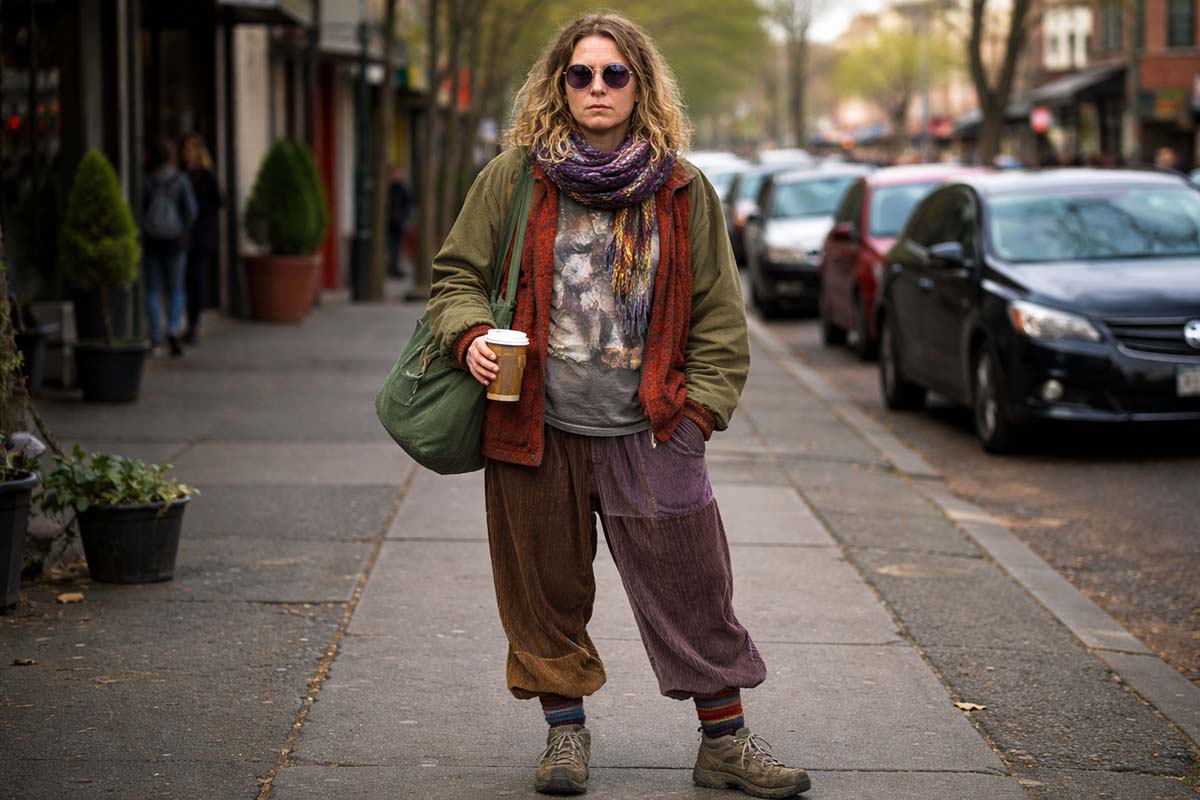
One woman wearing three scarves and an oversized jacket responded, “This is just how I am,” before disappearing into a bookstore that may or may not sell books.
Another subject, dressed in pajama pants and trail shoes, told researchers, “I don’t dress for other people,” despite standing directly among other people.
The study concludes that Portland appearance may serve an evolutionary purpose.
“If you look like this,” Morcroft said, “no one asks you what you do for a living. No one invites you to networking events. No one expects consistency.”
Researchers are now exploring whether Portland residents represent a transitional stage of humanity, one that has fully abandoned the concept of ‘presentable’ in favor of comfort, defiance, and an almost aggressive level of self-acceptance.
Further study has been postponed.
“We’ve reached the point where staring feels rude,” Morcroft admitted. “And also dangerous.”
The team plans to regroup after spending less time on Hawthorne Boulevard.