
There is something about Oregon’s high desert that changes you.
Maybe it is the silence stretching for miles. Maybe it is the way sagebrush bends in the wind like it has seen everything and is not impressed. Or maybe it is the staggering realization that people were surviving here more than twelve thousand years ago, long before the pyramids rose in Egypt, long before cities, long before most of the world even imagined permanence.
A few years ago in 2022, we stood inside Fort Rock Cave in Eastern Oregon. We brushed dust from ancient bedrock and listened to stories of sagebrush bark sandals uncovered beneath Mount Mazama’s ash. Those sandals, woven between 9,000 and 13,000 years ago, once wrapped around the feet of children who ran across a marshy lakeshore that no longer exists. We held replicas of them in our hands and felt that electric jolt of connection to something almost unimaginably old.
We left knowing Oregon is not just beautiful.
It is ancient.
Now another cave in Oregon’s high desert is deepening that story in a way that feels almost surreal.
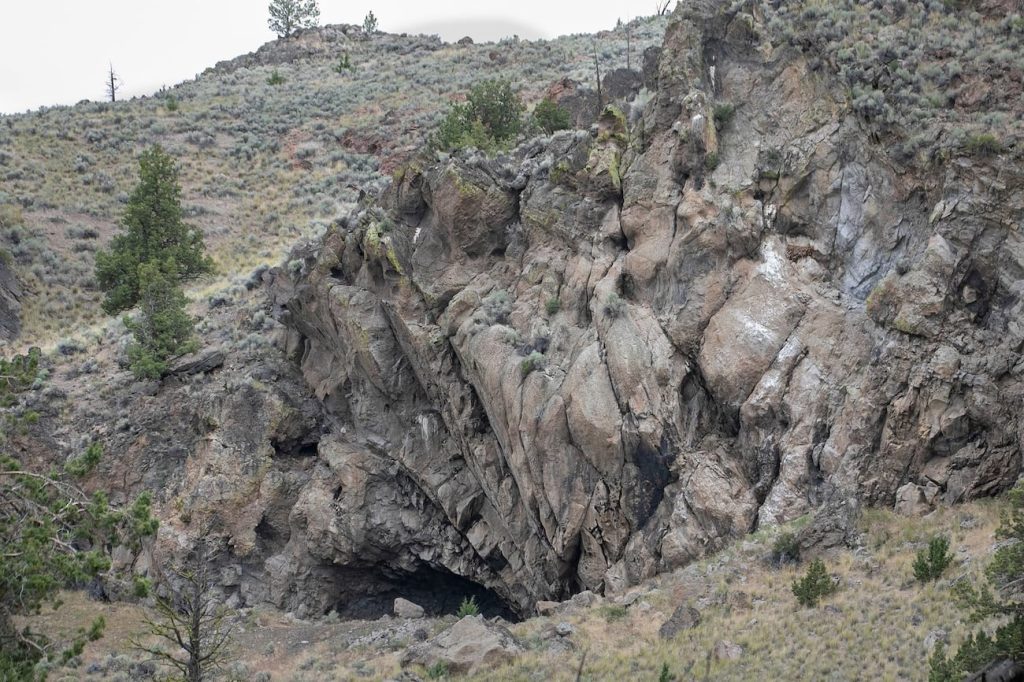
In south-central Oregon, near the well-known Paisley Caves and the Connley Caves, archaeologists have been studying material originally excavated decades ago from Cougar Mountain Cave. What they have reexamined may be one of the oldest examples of clothing ever found anywhere in the world.
This time, it is not just woven plant fibers.
It is sewn hide.
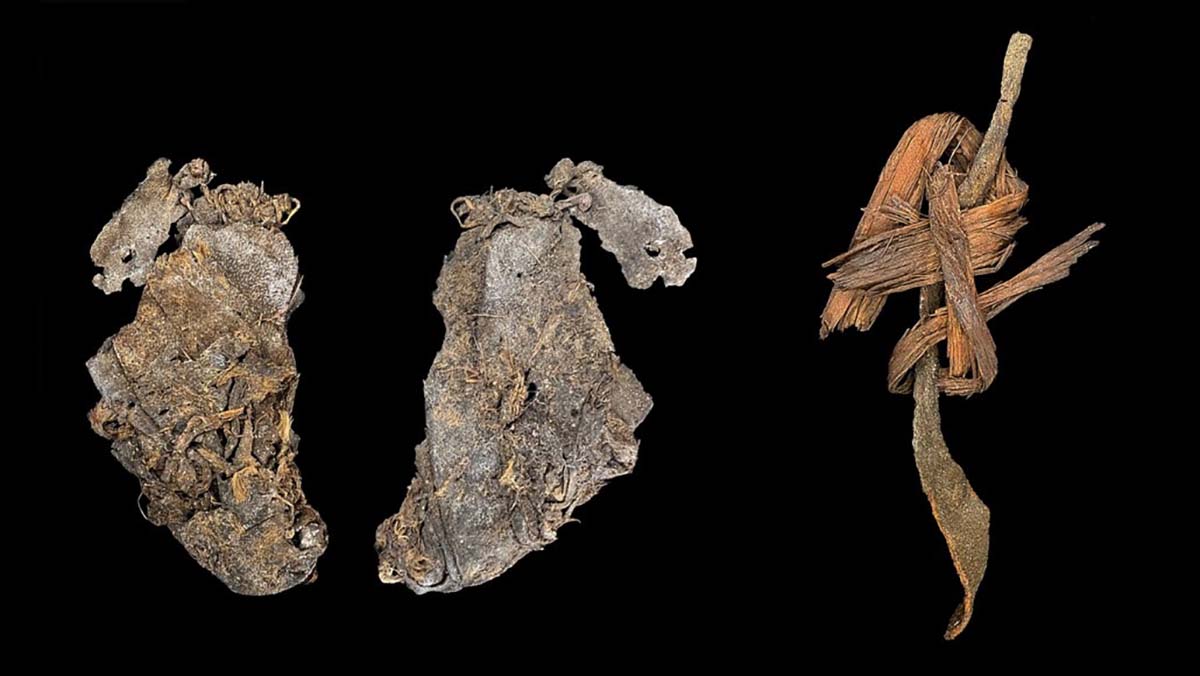
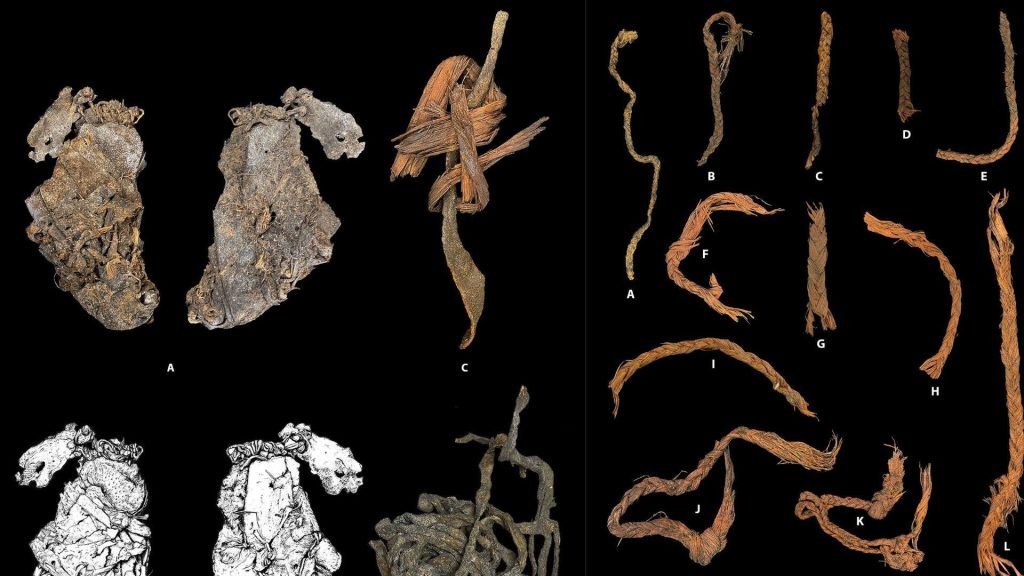
Two small fragments of elk hide, joined together with a cord of twisted fibers, have been radiocarbon dated to roughly 12,400 years ago, placing them at the very end of the last Ice Age. The pieces are just a few square centimeters in size, but what they represent is monumental. They are definitively sewn, with cordage passing from one hide fragment into another. That makes them the earliest known sewn objects ever discovered.
Credit: Richard Rosencrance
Let that settle in.
Not simply ancient clothing.
The oldest sewn clothing ever found.
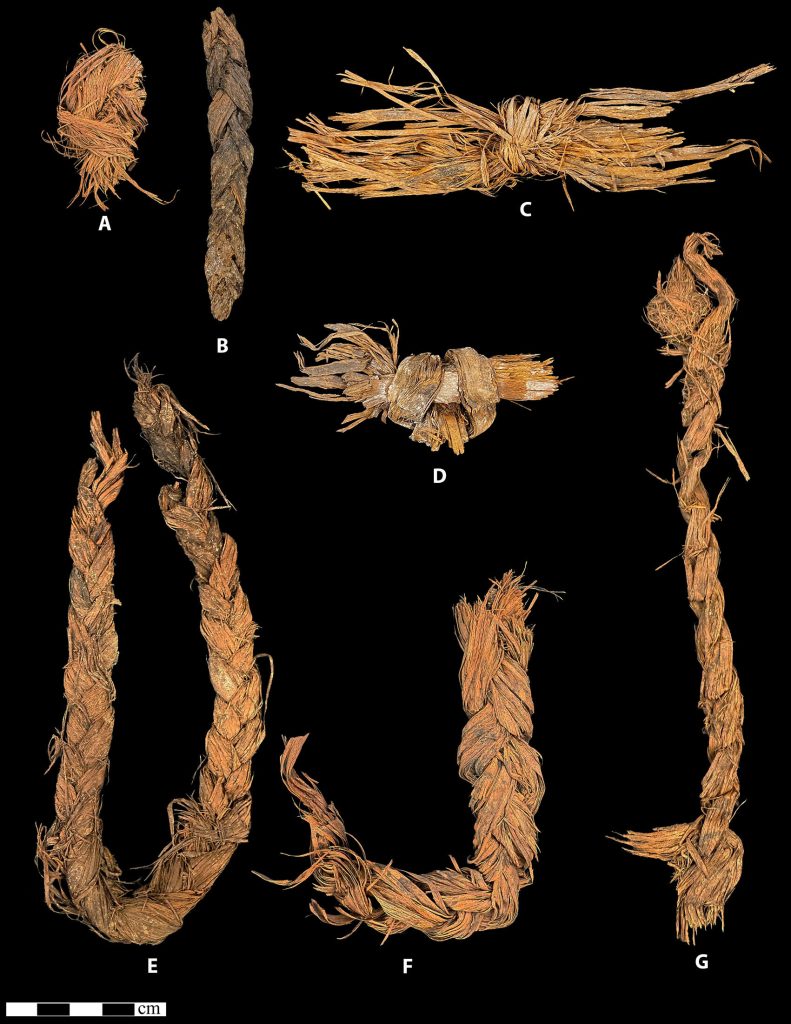
Archaeologist Richard Rosencrance and his team report that bone needles and stone tools were recovered alongside the hides. That detail changes everything. It means the inhabitants of the cave were not merely wrapping hides around their bodies. They were cutting, shaping, piercing and stitching. They were tailoring garments for warmth and protection in a harsh Ice Age environment.
If you want scale, consider this. The world’s oldest known pants are about 3,000 years old. These Oregon hide fragments are more than four times older.
Different cave. Different pocket of desert. But the echo back to Fort Rock is impossible to ignore.
At Fort Rock, Dr. Luther Cressman’s discovery of sagebrush bark sandals shattered the old “Clovis First” theory and proved humans were living in this region far earlier than many once believed. Those sandals demonstrated advanced weaving skill and adaptation to a dramatically different landscape. They showed that ancient Oregonians were innovative, capable, and deeply rooted in this land.
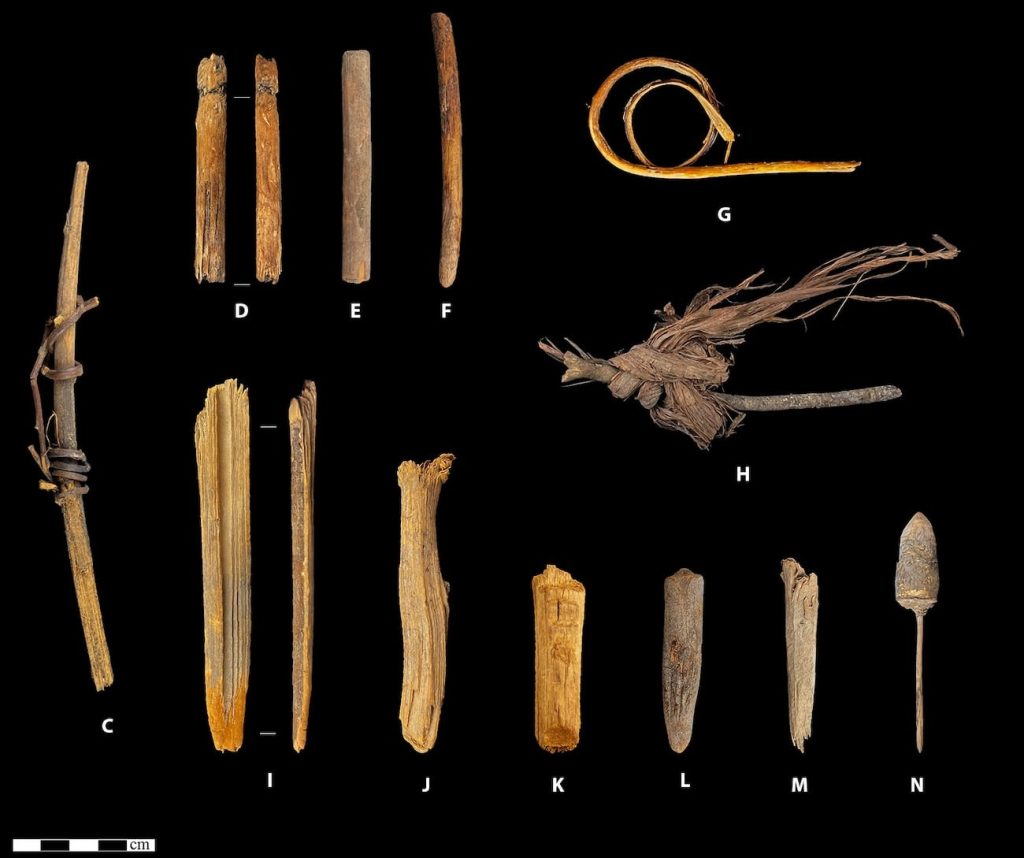
Credit: Richard Rosencrance
Cougar Mountain Cave pushes that story even deeper.
Imagine the Great Basin 12,400 years ago. Colder. In places wetter. Lakes shimmering where alkali flats now crack under summer heat. Waterfowl lifting from marshes. Herds moving across open ground. And inside a rock shelter overlooking that world, someone sits cross-legged with a hide stretched across their lap.
Credit: Brent McGregor | Richard Rosencrance
They take a bone needle. They twist plant fibers into cordage. They pierce the hide and stitch two pieces together.
Not decoration.
Not vanity.
Survival.
Sewing is not accidental. It requires planning. Dexterity. Knowledge passed from one generation to the next. It implies community and continuity. These were not people wandering aimlessly through an unforgiving landscape. They were adapted to it. Skilled within it. Masters of it.
Perhaps most astonishing of all is that any of this survived. Textiles and hides almost never endure for twelve millennia. They decay and disappear. But Oregon’s ultradry caves act like time vaults. Just as volcanic ash preserved the Fort Rock sandals, the desert air preserved these sewn hide fragments long enough for modern science to finally test them.
There is another layer to this story that feels almost poetic. The artifacts were originally excavated in the 1950s and sat in private hands for decades before becoming available for modern analysis. They waited. And when science caught up, they quietly rewrote part of human history.
When we stood inside Fort Rock Cave, I remember stepping into the shade of the overhang and looking out across the valley. The quiet felt almost sacred. I tried to imagine children laughing near a lakeshore that has long since vanished. I tried to imagine smoke rising from a small fire and someone patiently weaving or stitching while wind moved outside the cave mouth.
Now, somewhere else in that same vast high desert, another ancient craftsperson has stepped forward from the shadows of time.
Oregon keeps showing up in the oldest chapters of North American history. Fort Rock. Paisley Caves. And now Cougar Mountain Cave with what may be the oldest sewn clothing ever discovered.
The desert may look empty at first glance.
But beneath the sagebrush and volcanic rock, beneath the silence and sky, threads of human ingenuity are still woven into this land.
And every so often, Oregon pulls one loose and reminds us just how deep our story truly goes.
Source: ScienceNews.org