

Sometimes a story comes along that feels like it shouldn’t exist in real life. Too many layers, too many twists, and details that are each disturbing on their own somehow all tied together in one case. This is one of those stories.
In a decision released March 26, the Oregon Supreme Court reversed a conviction involving Randall DeWitt Simons, a man whose past already carried national controversy due to his connection to the 1996 case of JonBenét Ramsey. While the ruling centers on constitutional protections and digital privacy, the facts behind it are what have many people doing a double take.
Simons was hired in 1996 to photograph JonBenét Ramsey during her time in child beauty pageants. After her tragic and still-unsolved death later that year, he sold a portfolio of her images, drawing widespread criticism and thrusting his name into the national spotlight. At the time, he reportedly acknowledged the backlash could end his career. Decades later, his name surfaced again, this time in Oregon, under far more serious criminal allegations.
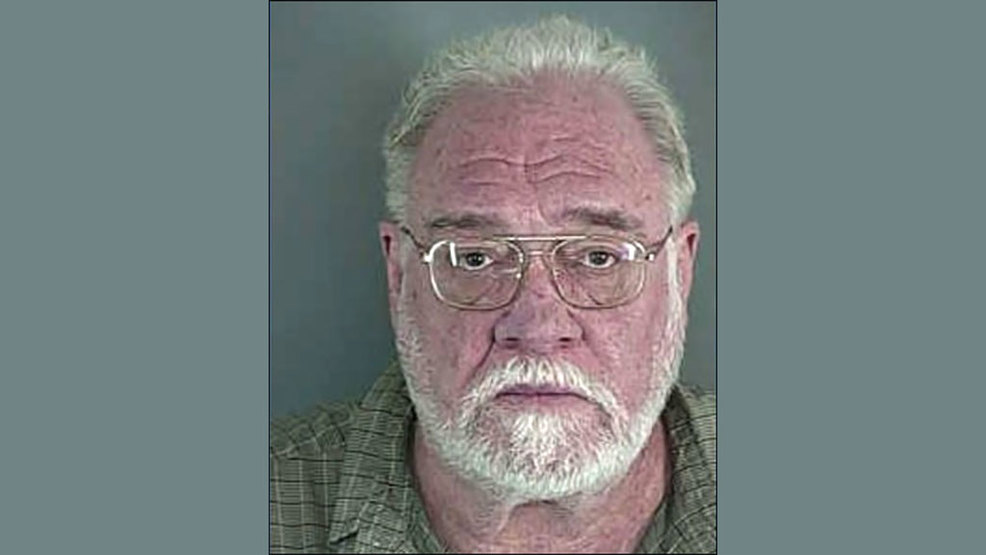
In 2019, Simons was arrested in Oakridge after authorities accused him of repeatedly accessing child pornography through a public WiFi network at a local business. Investigators say the activity spanned months, from 2018 into 2019, and involved repeated access to illegal material while connected to that network. A business owner reportedly noticed suspicious activity tied to a specific user and alerted law enforcement, setting the investigation in motion.
What happened next is now at the center of the controversy. Rather than immediately obtaining a warrant or shutting down access, police instructed the business owner to continue allowing the user onto the network and to monitor, log, and report his internet activity. That surveillance didn’t last days or weeks, it went on for more than a year. During that time, the business effectively acted at the direction of law enforcement, collecting detailed records of the user’s online activity and passing them along to investigators, all without a warrant.
Eventually, that information was used to secure a warrant to search Simons’ home and laptop, leading to his arrest and conviction on multiple counts related to encouraging child sexual abuse. Lower courts initially allowed that evidence, with the reasoning that activity conducted on a public WiFi network, especially one with terms of service allowing monitoring, did not carry a strong expectation of privacy.
The Oregon Supreme Court disagreed. In its ruling, the court made clear that using public WiFi does not eliminate a person’s constitutional protections. The justices emphasized that the focus is not just on what an individual expects, but on what limits society places on government behavior. Directing a private business to monitor and report a person’s internet activity for over a year, the court said, constitutes a government search. And under Oregon law, that requires a warrant.
Because that warrantless surveillance crossed a constitutional line, the court ruled that the evidence obtained during that period should have been suppressed. Without that evidence, the conviction could not stand. The court reversed the judgment and sent the case back to the lower court for further proceedings.
Notably, even within the decision there was some disagreement. Justice Stephen K. Bushong questioned whether there was a traditional expectation of privacy in a public WiFi network, but still agreed that the scope and duration of the surveillance ultimately violated constitutional protections. That detail underscores just how unusual the case is.
The ruling highlights an uncomfortable tension. On one side are extremely serious allegations involving the exploitation of children. On the other is a constitutional safeguard meant to limit how far the government can go in monitoring individuals, even in cases involving disturbing conduct. The court’s message was clear: the seriousness of a crime does not remove the requirement to follow the law when gathering evidence.
The case now returns to the lower court, where prosecutors will have to decide how to move forward without relying on the evidence gathered during that year-long surveillance. Whatever happens next, the implications of this decision will likely extend beyond a single case. It reinforces that law enforcement cannot bypass warrant requirements by using private parties to conduct prolonged surveillance, and it clarifies that even in 2026, online activity on public WiFi is not automatically free from constitutional protection.